Billeted in Blackpool
Zbigniew Maslaczyk’s Story
Zbigniew Maslaczyk was born in Kalisz, Central Poland on the 17th of January 1915, during the tumultuous days of the First World War. He had an older sister Janina, and a year later his brother, Mietek, was born.
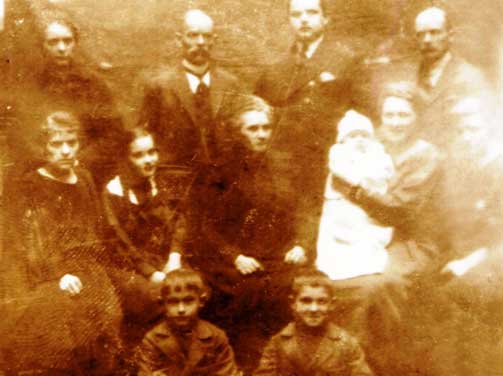
The family moved shortly after to the town of Ostrow Wielkopolski, where they bought a house on the corner of the main square. They also owned and ran a shop in the town. The inset picture shows Zbigniew, Janina and Mietek with their grandparents, taken around 1922.
One afternoon when Zbigniew was seven years old, he ran back from school as usual and into the family shop. When he opened the door he saw that the till had been broken open. He went round the back of the counter and was confronted by the horrific sight of his father lying on the floor, stabbed to death. In the conditions in Poland at the time, the murderers were never caught.
Zbigniew continued his studies and got a job as an engineering technician with a local company and qualified as a metallurgical engineer. He was keen on boxing and football but the hobby he loved most was the new sport of gliding.
When Poland was attacked by Germany in September 1939 the two brothers were separated. Mietek went eastwards and was captured a few weeks later by the invading Russians. He was held prisoner for the next 18 months in extremely harsh conditions in a labour camp.
Zbigniew went to the south and managed to escape to Hungary and eventually made his way to join up with Polish forces in France. On arriving in France he sent a postcard to his mother and family, which, despite the War, was actually delivered. This was the last time they were to hear any news of him until 1949.
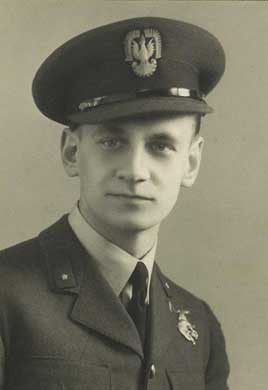
He enlisted as an Aircrafthand in the Polish Airforce attached to the RAF on the 16th of March 1940. He was initially based at Eastchurch Aerodrome on the Isle of Sheppey in Kent, which was one of the notable bases of the Polish Airforce during the Battle of Britain. He was then transferred to Manston GTS (Glider Training School?) near Ramsgate.
On the 29th May 1940 he was posted to the seaside resort of Blackpool in Lancashire, where the Polish Airforce Headquarters were based. Nearly all Polish Airmen passed through Blackpool for initial debriefing, training and further posting. During the War, over three quarters of a million RAF Personnel, 31,000 WAAF’s and over 18,000 Polish Personnel were billeted for a time in the Town. As can be imagined, the famous Tower and Winter Gardens ballrooms and bars did a roaring trade.
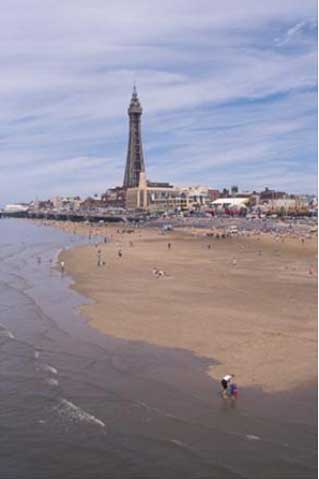
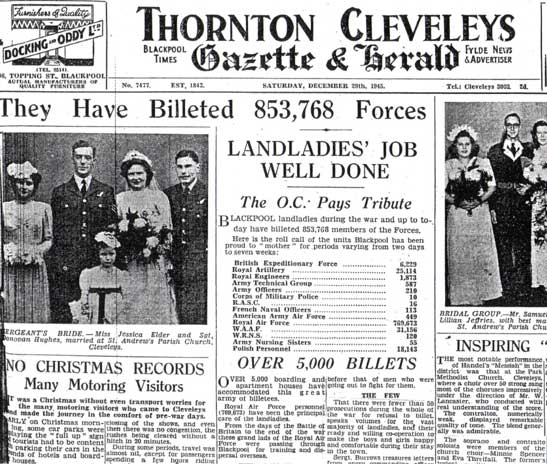
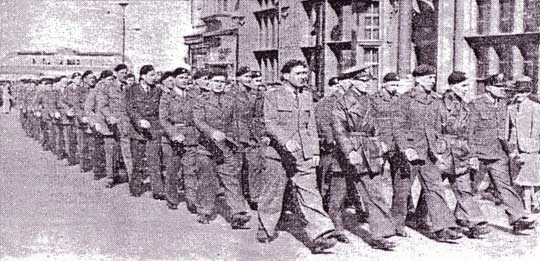
Zbigniew was billeted in Saville House near Manchester Square, a few yards from the Promenade and beach.
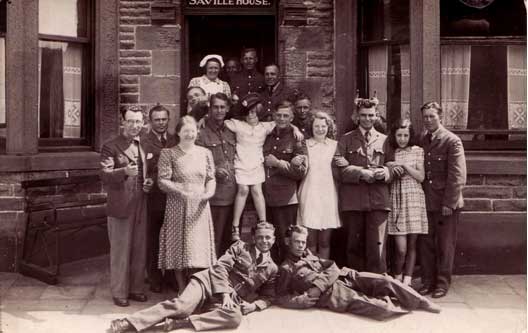
After only a few days in Blackpool, he was on the beach when he saw a beach ball that some young ladies had been playing with being washed out to sea. He swam out and returned the ball to its owner, a recently qualified teacher from Blackpool called Greta Threlfall. Through holding up seven fingers and pointing at the great landmark of the Tower, a date was made: meet outside the Tower at seven o’clock
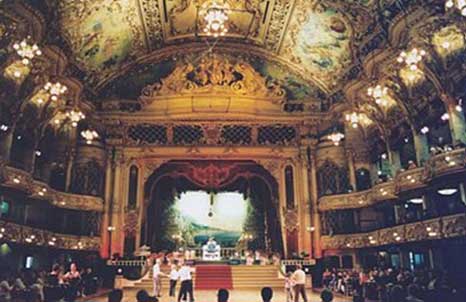
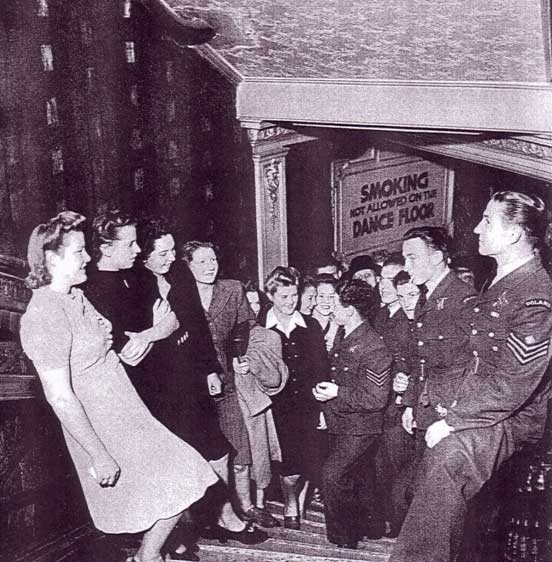
Zbigniew and Greta met, danced the night away and fell in love. Six months later, in November, they married. On the 1st September 1941 their daughter, Janina Greta, was born.
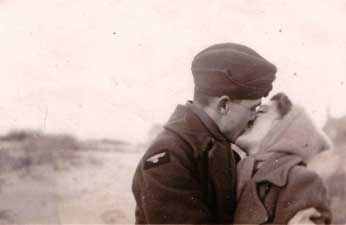
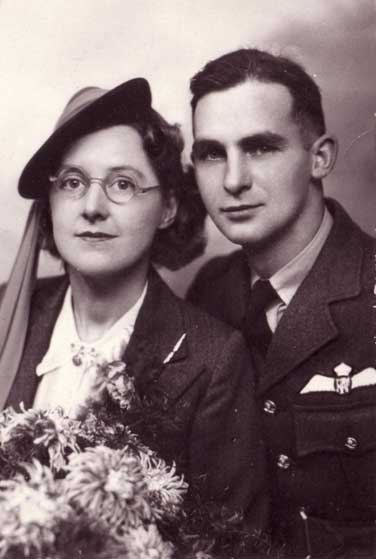
Further postings for Zbigniew included the Polish Depot at Bagington Aerodrome (now Coventry Airport), where his trade was recorded as Aircraft Hand/Pilot. Bagington was the base of 308 Polish Squadron that was fighting in the Defence of the Midlands. In 1941 the Squadron had 52 confirmed kills of enemy aircraft, the highest in Fighter Command. Zbigniew was then trained at Newton Flight Training School from where he qualified as a Flight Sergeant.
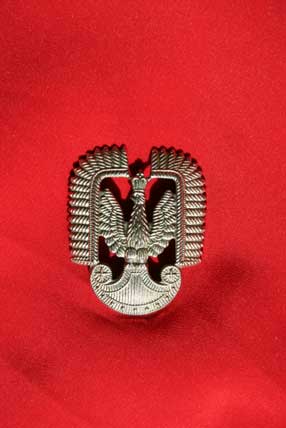
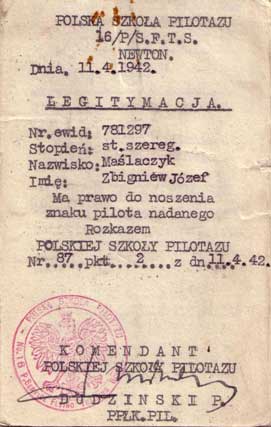
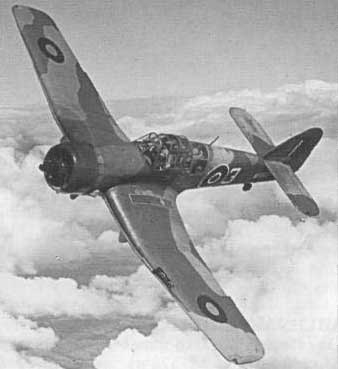
In April 1942 he was based at Cark airfield, on the beautiful Cartmel Peninsula in Lancashire, as part of the 6th AACU (Anti Aircraft Co-operation Unit). Part of their work included pulling drogues for gunnery practice. On the 31st of May he took off on a training flight in a Miles Master aeroplane with Warrant Officer Pearson. They flew to Ringway Aerodrome, Manchester. The plane crashed while doing exercises diving on a gun post and both men died. At his wifeís request Zbigniew was buried in Layton Cemetery, Blackpool, but not at the Polish War Memorial, so that she could eventually be buried along with him.
Greta was two months pregnant, expecting their second child. Their son, Stefan, was born in January 1943 in the New Central Hotel, which was being used as an emergency maternity hospital during the War. In 1949 she traced Zbigniewís family in Poland through the Red Cross. She sent a letter to his mother, breaking the sad news that her son had died seven years previously but she now had two grandchildren. She later visited the family in Poland and always stayed in touch with them.
Greta anglicised her name from Maslaczyk to Mrs Massey. She brought up her two children and went back to her teaching career, teaching at schools in Blackpool including Thames Road, Waterloo and Highfield. She finished her career at Woodlands Special Needs School, where she was a much loved teacher. She died in July 1981, age 65, and was laid to rest with Zbigniew.
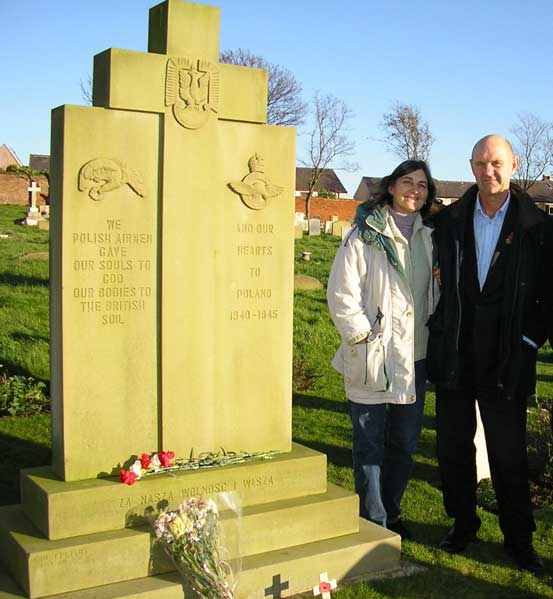
Zbigniew and Greta now have a daughter and a son, five grand children and five great-grand children. Although Zbigniew was only in England for a short while during the dark days of the Second World War, he lived life to the full and “made hay while the sun shone”.