Opens in a new tab

Blackpool 1940

  • Table of Contents

Blackpool, Lancashire
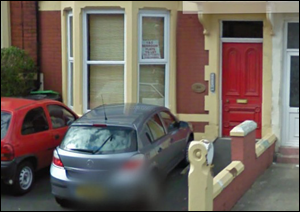
Goodwood Hotel, 209 Hormby Road. Kindly donated by Martin Feledziak

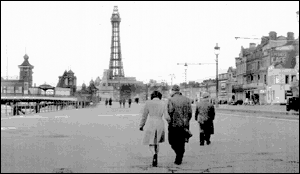
The sea-side town of Blackpool became the playground for the industrial north during the Victorian Era. The Industrial Revolution and the ‘Age of Steam’ brought prosperity through improvements to working conditions and increased leisure time. The wealth of the town was reflected in the grandeur of the lavish architectural design applied to the hotels on the Golden Mile and in quieter side streets leading away from the seafront. The town had enjoyed its prime position as a holiday resort right up until the outbreak of war in 1939.
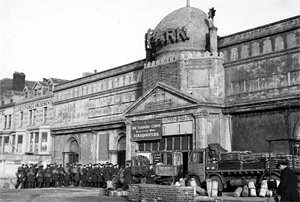
Black and white photo of people and lorries outside a large, weathered building labelled "BATHS," serving as a training corps headquarters.

War brought a new role to the town. After Dunkirk, Blackpool became the depot for Polish aircrew prior to being despatched to stations or depots for training or operations. New arrivals were sent to the Goodwood Hotel in Hornby Road for debriefing and registration prior to unit assignment and despatch. (The Lansdowne Hotel became the Polish Airforce HQ). In the aftermath of Dunkirk forces were left short of equipment and in a pretty poor shape. Britain was on invasion alert. For the young Poles, duties were regarded as tedious and quite demeaning. Young men had lied over their ages to enlist and fight. Construction of prisoner of war camps was often the closest action many saw in the early months of their war. While the Goodwood Hotel became a centre for enlistment, the White Eagle Club also in Hornby Road,became the officers club.
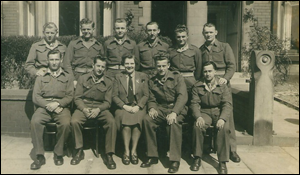
A group of ten men in military uniforms and one woman in civilian clothing sit and stand in two rows outdoors in front of a building.
Goodwood Hotel, 209 Hormby Road. Kindly donated by Martin Feledziak
A grey car is parked in a small drive in front of a house with a red door; a red car is parked on the street beside it.
La traduction française de cet article n'est pas encore disponible.
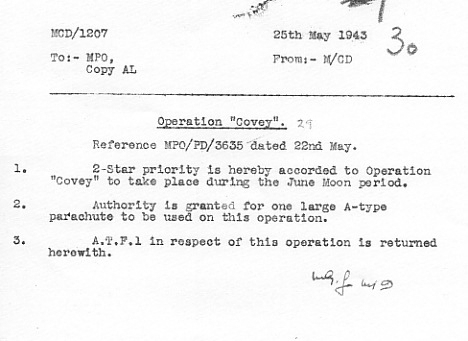
Typewritten military memo dated 25 May 1943, authorising Operation "Covey" to occur during the June Moon period, including use of one A-type parachute.

Operation BARDSEA

Operation Bardsea (1943–44) trained Polish Jedburgh-style paratroopers for sabotage and resistance behind enemy lines after D-Day, later linked to Operation Dunstable and Polish exile missions.

Read Article
Black and white photo of a man wearing a coat with a large fur collar, smiling and facing the camera.

Herbert Noga

The mysterious 1945 crash of Polish pilot Herbert Noga’s P-51 Mustang on Darwen Moor — a wartime hero’s final flight remembered with honour.

Read Article
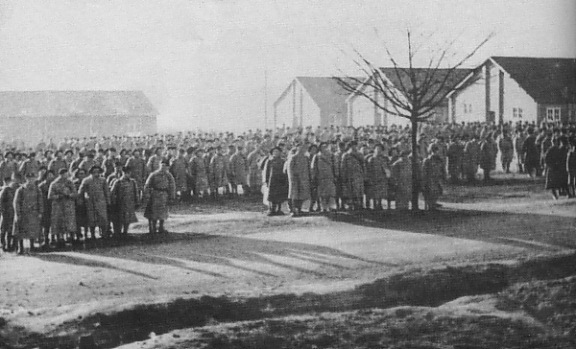
A large group of people wearing coats stands in queues outdoors near several barracks-style buildings on a clear day.

The Polish Army In France & 2DSP Internment in Switzerland 1939 – 1940

Polish troops in France fought valiantly before retreating to Switzerland in 1940, where 12,000 were interned. They worked, studied, and secretly trained until war’s end.

Read Article