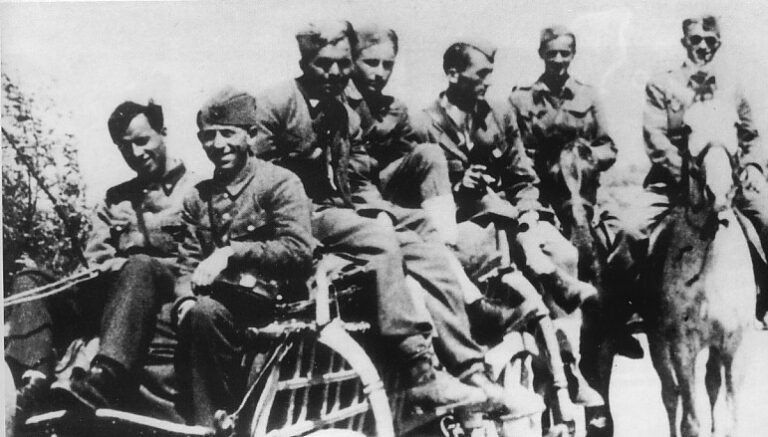
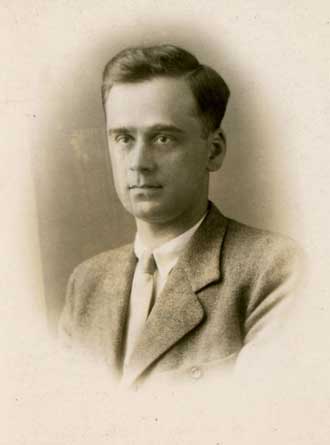
My father’s photograph was taken in 1939. He was a professor at the Lwow Polytechnic Institute in the Department of Metallurgy and Director of the Mechaniczna Stacja Doswiatczalna, a metallurgical laboratory that did work for the Polish Ministry of Defence. He made a major technical contribution to Polish arms by developing the armour-piercing projectile that made the Polish wz.35 “Uruguayan” anti-tank rifle so effective. It could be operated by one man and was capable of piercing the armour of any German tank of that time. Unfortunately, this weapon was regarded as such a secret that it was kept in secret storage and not issued to the army. War broke out so quickly that it could not be distributed in time to permit effective training and battlefield use. My father was also the Head of one of the Polish Technical spying organizations specializing in obtaining data on Germany’s metallurgical industries and had some very close calls in this activity. In 1966 my father went back to Poland and Russia on a Canadian diplomatic passport. At great risk, he brought money to Cardinal Wyszynski and while visiting Lwow, now Lviv, he photographed the destruction of the Orlat cemetery and smuggled these photographs of completely wanton desecration to the west.
I was only 9 years old when WWII broke out. Through a great stroke of luck we were able to cross the border into Romania on September 18. I can remember seeing numerous Polish Los bombers lined up at an airfield near Bucharest. Before the war, my father, Dr Tadeusz W. Wlodek, had strong ties to the Polish Ministry of Defence. He once told me that the Los (PZL P.37) bombers were used very little because they lacked the spark plugs required for flight at higher elevations say about over 10,000 ft. To operate them at lower altitudes was essentially suicidal. The Polish special materials industry lacked the technology required to produce spark plugs that would operate effectively at low pressures. According to my father, a secret agreement existed with Great Britain that, in case of war, the British would provide the required spark plugs. This, of course, never happened.
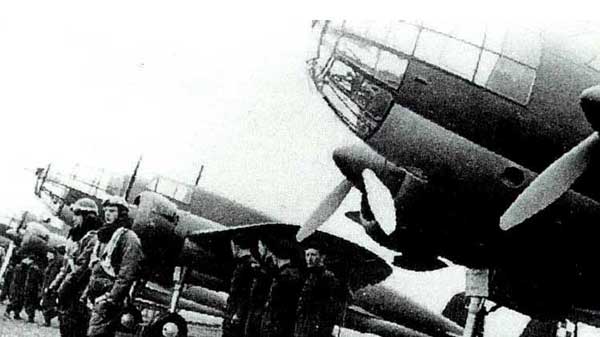
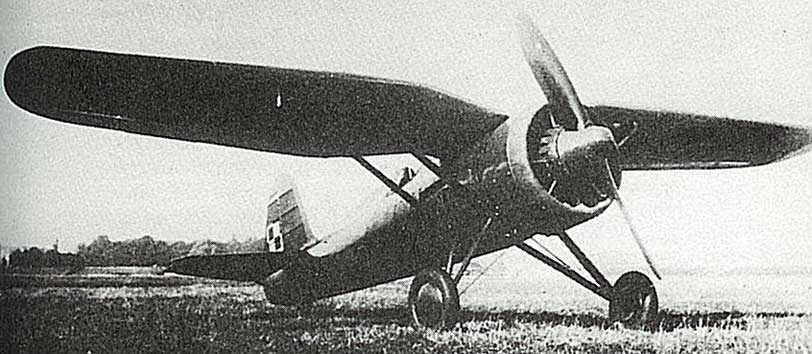
The most modern aircraft that Poland possessed (the Los was actually faster then the PZL-11) was thus never effectively used. The Rumanians used the Los when they joined Germany in the invasion of Russia.
Another point that is rarely mentioned is the Polish strategy in designing aircraft. Poland could not afford to develop simultaneously all the types of aircraft required by a modern air force. The plan was to select one type, put it into production, sell it to other countries, and use the proceeds of such sales to fund the design and construction of the next type. The bomber was the first type to be selected, and thus the Los. The Polish deficiency in fighter aircraft was realized. When war broke out, my Father was part of a delegation sent to the USA to purchase the American P- 40 fighter. The Americans were willing to sell the P-38 to Poland, but would not offer any credit arrangements. When war broke out my father immediately returned to Poland, by flying the Clipper to Portugal, then to Sweden, arriving in Warsaw on September 2 1939, in the last commercial flight to reach Poland.
Thought that these details, which I have never seen published anywhere, might interest you.
Stanley T. Wlodek
San Diego CA