The full extent of Poland’s role in code breaking has largely been understated or at best ignored and the true perspective has only recently made with the publication of Budiansky’s (2000) definitive work on the subject. While it is widely known and accredited (Foot, 1984; Stafford, 1997) that Polish and French Intelligence had Enigma machines at the outbreak of war, the degree to which the code breakers had ‘read’ enemy radio traffic has never been fully revealed. Indeed Stafford (1997:221) accredits only a few lines while the real story is amusing and displays much of Poland’s sense of humour and bravado in the affair. It also makes ‘classic’ historical analyses of Poland by the likes of Liddell Hart woefully inadequate by believing Poland’s readiness for war being on a much lower scale. Indeed, since the rebirth of Poland, agents had been active in collection of information and reconnaissance within the Weimar Republic with some limited success until the rise of the Third Reich when activities were stepped up (Ćwięk, 2021). Had it not been for the Poles pre-war audacity, Churchill (Stafford, 1997) would have not had his ‘Golden Eggs’ (Ultra transcripts) to play with or use while in negotiations with Roosevelt.
B-Dienst (Germany’s naval intelligence service) had cracked the Royal Navy’s cipher in 1935.
British Intelligence had little success in de-ciphering German radio traffic and remained largely ‘blind’ right up to the outbreak of war, hence the surprise when a German U-boat sank Royal Oak at Scapa Flow in the Orkney Islands. In the early 1920s, the Biuro Szyfrow (Polish Intelligence) had successfully monitored German radio traffic. Between February 1926 and July 1928 German naval cryptology followed by army radio traffic abruptly became unreadable. The Poles suspected new codes and ciphers generated by machines were now being used (Budiansky, 2000) after initially suspecting it was dummy traffic. An early Enigma machine had been displayed at the 1923 Congress of the International Postal Union in Berne, Switzerland for businessmen eager at keeping the contents of their telegrams secret. In 1928 the Poles were given direct confirmation in the existence of the Enigma machine with military capabilities. Polish Customs at Warsaw inspected a package mis-directed to Poland that prompted an immediate diplomatic protest from Germany that the package should be returned immediately and un-opened. With their suspicions aroused, Polish Intelligence technicians checked out the contents and found a commercial version of the Enigma machine. Quite calmly and with a dash of audacity, Biuro Szyfrow ordered an Enigma machine from the manufacturers in Germany by using a false cover and address.
Initially Biuro Szyfrow had great difficulty in breaking captured radio traffic and in January 1929 approached the renowned mathematics institute of the University of Poznan (Budiansky, 2000; Ciechanowski and Tebinka, 2005). Secret classes in cryptology ran in parallel to undergraduate studies. Eventually, two students Jerzy Rózycki and Henryk Zygalski under the tutorship of Prof. Zdzisław Krygowski worked in a vault in the Army’s regional command post in the outskirts of Poznan – a building built by Kaiser Wilhelm II as the official residence for the Crown Prince. A little later, Marian Rejewski joined the group (Ciechanowski and Tebinka, 2005). From 1933 onwards Biuro Szyfrow’s B section (Germany) had been reading German Enigma traffic.
As war loomed, Poland in their desperation used the Enigma card to guarantee French and British support. The ‘ace’ was that the Poles had replicated the machines and broken the code through use of old telegrams and application of mechanical combination theory or the theory of permutation (Ciechanowski and Tebinka, 2005). Capt. Gustave Bertrand (Bolek) attached to the French cipher’s bureau aided the Poles and when transferred to ‘D’ Service de Renseignements under Deuxième Bureau were working closer. Materials obtained by the French spy Hans Thilo Schmidt (Asche) who worked in the German Chiffrierstelle provided invaluable assistance apart from not being able to obtain wiring and mechanical diagrams of the rotas (Budiansky, 2000; Ciechanowski and Tebinka, 2005). In 1937, the structure and function of the Enigma machine was upgraded to include six different sets of keys, rotors and connecting plugs. In response, Rózycki constructed a ‘clock’ to Rejewski’s use of a ‘cyclometer’ thus enabling cipher traffic to be read (Budiansky, 2000; Ciechanowski and Tebinka, 2005). Through the interception of a slight delay of an SD code used by the Wehrmacht enabled the 4th and 5th rota settings. Through a spy in the Luftwaffe, the Poles were aware of only 3 rotas being used through daily resets and the procedures would change at the outbreak of war (Budiansky, 2000; Ciechanowski and Tebinka, 2005).
To the reluctance of the British, the newly formed Enigma team that also included French and Polish cryptologic services met in Paris on 9-10 January 1939. The Poles were instructed to release the ‘solution’ if the British and French counterparts had made progress with decrypting German traffic of which they had not.
The decision to reveal their ‘Ace’ was through not enough time to develop more ‘bombes’ and ‘Zygalski sheets’ (Ciechanowski and Tebinka, 2005). These sheets were perforated sheets from a specially created devise to assist in the decoding (Budiansky, 2000). On 15th September 1938, the settings were changed no longer daily, but for each transmission leaving the ‘cyclometer’ redundant until Rejewski developed a new mathematical model of another devise, the ‘bombe’ (Budiansky, 2000; Ciechanowski and Tebinka, 2005; Kochanski, 2012).
Days before war broke out and through clandestine meetings, (Menzies who was head of MI6 was present at the meeting and this is described in Foot’s 1984 book on the SOE) samples of the machines left Poland ahead of the advancing German Army to Britain and France. It was after Capt. Gustave Bertrand took severe steps to persuade Alister G. Denniston (Head of Britain’s code and cypher school) to attend a meeting at Pyry on 25th July 1939 and shown the replicas. The key representatives for Britain: Dillwyn (Dilly) Knox and Alastair Denniston, for France: Gustave Bertrand and Henri Braquenié with head of Polish cipher school LT: Col. Gwido Langer and Lt. Maksymilian Cięźki (Kochanski, 2012). The French copies were transported by sea with Britain’s replica being transported by Bertrand in the company of Lt. Cmdr. Wilfred Dunderdale and presented on 16th August to Col. Stewart Menzies (Ciechanowski and Tebinka, 2005).
The mathematicians reward from British Intelligence – a scarf depicting a horse-racing scene (Budiansky, 2000: 96). British and French Intelligence together with diplomats and leading politicians were stunned by how late in the day the Poles had played their hand. Both the French and the British Governments posturing had been largely pledges of support rather than physical resourcing through arms and munitions being sent, hence the fiasco over the delivery of fighter aircraft from Britain.
Just before the outbreak of war, the Poles had by 6th July read German coded messages and on 6th September the Polish team escaped eastwards towards Brześć and through to Romania after the Soviet invasion with Rózycki, Rejewski and Zygalski avoiding internment through the chaos of war by approaching the British Embassy in Bucharest after initially being rejected by the French with the British promising to consult London (Budiansky, 2000; Ciechanowski and Tebinka, 2005). The ambivalent attitude by the British and French stems from pre-war Polish short-sightedness and Anglo-French decision not to support Poland if Hitler invaded despite British ‘guarantees’ in place (Tebinka, 2002).
The French Capt. de Winter rescued the situation through the team evacuated to France via Yugoslavia and Italy and others, Langer and Cięźki (who carried two more replicas) were released from internment camp to Château de Vignolles in Gretz-Armainvilliers not far from Paris. Here the team read some 8,440 messages of which 1,000 were on the Norwegian campaign and about 5,000 on the French campaign (Kochanski, 2012).
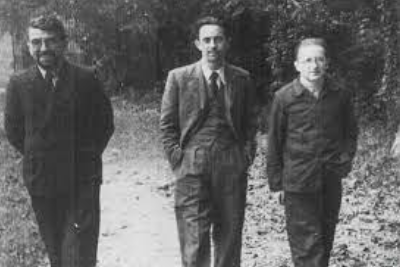
With the fall of France, the Polish Enigma team fled south to Toulouse prior to the armistice being proclaimed where upon the team moved to Oran in Algeria and then back to France taking over the Château des Fouzes in Uzès. For some inexplicable reason, the Polish Government in Exile under-estimated the value of the team (Budiansky, 2000, Kochanski, 2012) with Bertrand’s decision to keep them in Vichy France placed them under threat and blocked any escape attempts. On the invasion of Vichy France, Rejewski and Zygalski crossed the Pyrenees into Spain where they were imprisoned until their release. In May 1943, they left for Portugal and arrived in Britain in July. The cryptographers were attached to the Polish decryption unit in Stanmore working on low grade SS ciphers and codes for the remainder of the war and is generally felt their skills and talent were wasted. Rózycki drowned when his ship returning him to France from Algeria was sunk. Langer and Cięźki were captured by the Germans along with two other cryptographers Palluth and Fokczyski who were sent to Sachsenhausen-Oranienburg concentration camp (Budiansky, 2000; Ciechanowski and Tebinka, 2005; Kochanski, 2012). Langer had been caught by the Gestapo in the internment camp at Schloss Eisenberg and interrogated whereupon he mixed lies and truths claiming the code had not been broken after changes in 1938 (Kochanski, 2012) and managed to survive the war. Langer felt betrayed by the French and mistreated by Stanislaw Gano, head of Polish Intelligence after his arrival in Britain and died in 1948 (Ciechanowski and Tebinka, 2005). Cięźki’s interrogation partially tallied with Langer’s and survived the war only to die in November 1951 on social welfare. Zygalski lectured for a while in the Battersea Technical College in London and died in 1978.
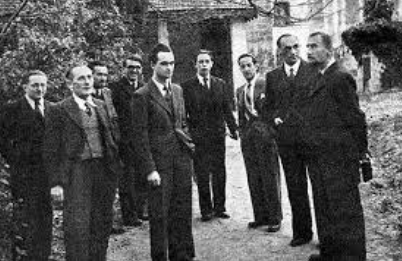
The three leading Polish code breakers contribution to the war was decisive and gave a level of superiority not seen or experienced before on the scale of almost industrial decryption whose knock-on effects are inestimable. It helped win the battle of Britain, Battle for the Atlantic and secured the success of Operation OVERLORD in history (Ciechanowski and Tebinka, 2005). The North African Campaign and the invasion of North Africa, Sicily and Italy enabled politicians and military authorities make judgment and decisions on facts and relatively free from error in judgement or subsequent operations. By reading countless ciphers, armed resistance groups in France were saved from ambush and arrests with the counterintelligence Travaux-Ruraux to operate to some effect.
End Note
Robert Harris published a novel in 1996 that portrayed a character who was Polish, spy and traitor. The storyline did not go down well with the wider Polish community and although fiction, the ‘hurt’ again reflected the Polish community’s frustration that Britain has not always been generous in congratulating or given full recognition to Poland’s contribution to the war.
Further Reading
Budiansky, S. (2000) “Battle of Wits: The complete story of codebreaking in World War II, Viking, UK.
Ciechanowski, J, S and Tebinka, J. (2005) “Crypographic Cooperation – Enigma”, in Sterling, T; Nałecz, D and Dubicki, T (Eds) “The Report of the Anglo-Polish Historical Committee Vol.1”, Valentine Mitchel, UK, Ch. 46.
Ćwięk, H. (2021) “Purpose – to recognize Germany. About some activities of the Polish intelligence in the 1920s”, Historia i Świat, No.10, pp.353-363,
Foot, M.R.D (1984) “SOE The Special Operations Executive 1940-46”, London Bridge, UK.
Kochanski, H. (2012) “The Eagle Unbowed: Poland and the Poles in the Second World War”, Allan Lane, UK.
Stafford, D. (1997) “Churchill’s Secret Service”, Abacus Books, UK.
Tebinka, J. (2001) “British and Polish intelligence services in the 20th century. Co-operation and rivalry”, Acta Poloniae historica, No.84 pp. 101-135.
Selected Websites
For further information on the Enigma and Ultra secrets see:
www.pbs.org/wgbh/nova/decoding