Opens in a new tab

E/ UP Operation SAINTLY-SOLEDAD

  • Table of Contents

Latin America is often over looked for SOE – E/ UP operations but also was under the Continental Action as a whole (Ciechanowski, 2005).  There were many Polish diasporas in Latin America with Polish legations in many countries to help look after the Polish community that had been operating during the interwar period (Skóra, 2019).  Their integration in some countries was limited because they had set up their own schools, welfare systems and cultural centres.  Most nations remained neutral with the exceptions of Brazil and Mexico.  Brazil sent 25,000 troops to Italy to support the Italian campaign and Mexico deployed their 201 Squadron (Aztec Eagles) to support the Pacific Campaign in the liberation of the Philippines.

The Allies had access to additional facilities in the Latin American countries with strategic bases in Cuba, Panama and Caribbean Islands forming a chain across the region in the hunt for U-boats that were attacking convoys of raw materials.  Mexico and Uruguay experienced economic booms during this period.  Argentina and Uruguay exported agricultural products while Chile’s copper, Colombia’s platinum, Peru’s cotton and petroleum products from Mexico and Venezuela were exported to the USA and distorted their economies.  After the attack on Pearl Harbour by the Japanese on 7th December 1941, many Latin American countries cut their ties with the Axis powers.  It is estimated the Lend-Lease programme to support bases in the region saw $400 million in exchange for raw materials.

Against this back-drop, Allied intelligence services were concerned about political shifts towards neo-Nazi regimes that could destabilise the resourcing of essential materials.  Hemingway’s novel, Islands in the Stream published posthumously captures the spirit of an adventurer and U-boat hunter.

Hitler was not particularly interested in Latin America but acknowledge that its neutrality and need to supply raw materials were important.  The Foreign Security Service (Ausland-SD) Section D-4 operated Operation BOLÍVAR was an intelligence and communications operation based in Argentina with most of its agents arrested by mid-1944.  Most countries kept a close watch on the German communities and some deported Germans during the war.

E/ UP Operations:

Logistically and diplomatically, supplying the legations in Latin America needed the British Foreign Office (FO) approval (TNA/ HS4-232).  Transport was to be by the MS. Rozewie, a 766-ton Polish cargo ship built in Finland in 1938 and had managed to escape the Baltic blockade when trapped in Sweden.  
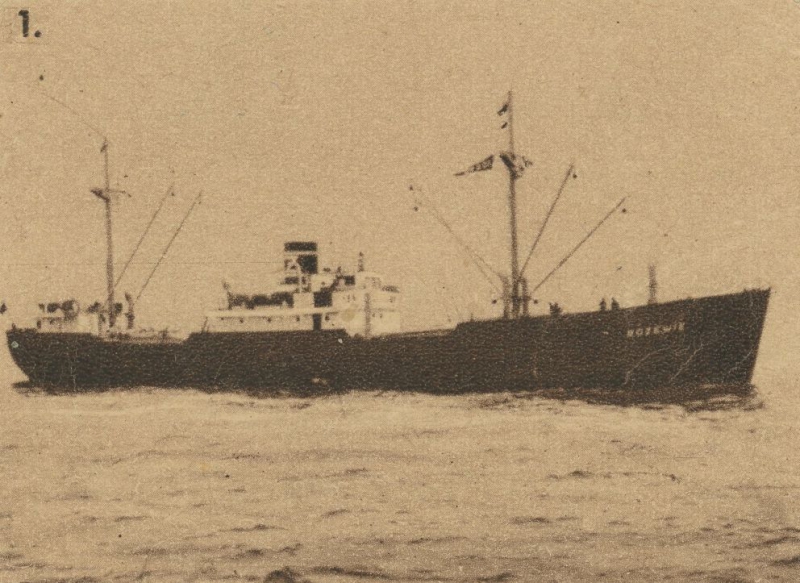
Black-and-white photo of a cargo ship sailing on the sea, with visible masts, cranes, and a funnel.

Source: Narodowe Muzeum Morskie w Gdańsku.

After escaping to Britain in November 1939, it was allocated carrying cargo from Latin America to New York.  It was planned the ship under the command of Capt. Jerzy Lewandowski would agree to transporting sabotage equipment and W/T sets and agent GOMEZ/ ROCA (Edward Paciorkowski) would be able to agree to the mission.  However, Lewandowski and the ships owners alongside the Polish Foreign Ministry objected to diplomatic bags.  Lewandowski and GOMEZ decided to use members of the Saintly-Soledad organisation to use coastal traffic to smuggle these items to the various legations (TNA/ HS4-232).  On 6th August 1942, she was sunk by U-boat 66 off Trinidad with three casualties.  The remaining crew and Capt. Lewandowski were taken to Germany as POWs.

In Salvador, civilians were employed and consisted of Józef Soboliński and Jermi Stempowski (Ciechanowski, 2005).  Mr M. Kaczmarek joined later, to assist Paciorkowski whose contacts included Lati-Condor Air Service.  Paciorkowski would ‘flaunt’ his contacts with US intelligence and came under scrutiny by German counterintelligence (Ciechanowski, 2005).

The operation was under the control of the Estezet Station in New York run by Sylwin Strakacz and Lt. Col. Ludwig Lucjan Sadowski (Sadwig) under the guise of the Polish Consulate General (Ciechanowski, 2013).  Their main activities were to cover USA, Canada, Brazil (Inca), Argentina (Perełka) whose Station was called Sabanilla in Rio de Janeiro (Buenos Aires was called Salvador) and indirectly Chile (Almagro), Paraguay, Uruguay, Peru and Bolivia.  They were to monitor the Polish diaspora for infiltration of communists and any activity that would damage the US, Canada and Polish affairs.  In effect it was a counterintelligence operation headed by Capt. Henryk Żychoń Schmidt.  Michał Glazer (Czarny) a specialist in Jewish affairs, Józef Śliwowski (Mazur) who had operated in Portugal (Station P) and Helena Sworakowska (Helena Monwid), a translator made up the core of the New York Station (Ciechanowski, 2013).  The Station was not known to the Polish II Bureau.  The Station in Buenos Aires was the hub of the intelligence operation as part of the Ministry of Interiors ANGELICA operation (TNA/ HS4-232).

The Station started cooperation with the US during the summer of 1941.  The operation was sanctioned by President Roosevelt through William J Donovan acting as a mediator and retired Polish Col. Jan Henryk Żychoń.  Żychoń prepared the planning of the operation for the US intelligence with a high degree of secrecy where there was no direct contact with the station in New York or the Legations in Latin America.  The intelligence reports covered Axis morale as well as material losses and German activities in the region (Ciechanowski, 2013).  The New York station also covered collection of information on Ukrainian emigres on behalf of the US and after 13th June 1942 was handled by the Office of Strategic Services (OSS) and later the US Military Intelligence Division (G-2) which was a clandestine contact (Ciechanowski, 2013).  Counterintelligence on German minorities, Ukrainian and pro-Nazi White Russians was passed over to the authorities and the FBI.  Intelligence on Germans in Argentina was collated by Maj. Marian Chodacki (Maracz) from 1943.

From July to December 1943 over 9,000 reports were passed to the US authorities and then this slightly decreased over 1944 to an average of 6,000 and in early 1945 this had dropped to 869 (Ciechanowski, 2013).  The quality of the intelligence reports compiled by the Poles was recognised by Gen. Hayes A. Kroner ‘as the best in the World for little in return’ (Chodakiewicz, 2007) since the reports spanned a wide range of issues they covered.  Estezet Station was closed in September 1943, but intelligence from Latin America continued to be collected by the SNW department run by Col. Mitkiewicz- Żółtek of II Bureau through the Polish Consulate.  In America the Poles had stations in almost all major cities such as Buffalo, Chicago and Washington and Ottawa in Canada.

 Abwehr agents were planning coups in Brazil, Argentina and Chile where pro-Nazi sympathisers were taking advantage of increasingly popular fascist movements.  In December 1942 the Brazilian censors stopped the newspaper Corrio Do Parana blocked a report into Japanese 5th columnists who had been operating in a military zone (TNA/ HS4-232) with a copy of the report in Polish being sent to Estezet Station in New York.  On 27th February 1942, the political activities of Dionisio Foianini Banzer, came to the attention of the Poles.  He was Minister for Munitions and a Nazi sympathiser was planning a coup and sabotage tin supplies to the Allies (TNA/ HS4-232) and had a secret meeting in Argentina with acting President Castillo whose dislike of US sanctions hardened when he learned a radical group led by Deputy Raúl Damonte Taborda were seeking arms from the US to put a stop to the Nazi activities being run through the German embassy (Anon, 1941; Banta Murkland, 1941).  In an additional report dated 7th August 1942, there was evidence of an Argentinian cabinet shuffle which would preclude an army coup that was pro-Axis and antisemitic (TNA/ HS4-232).  The report indicated that Uruguay might join a pro- German bloc.  President Castillo’s illness indicated he would resign in favour of Senator Patroncosta which was opposed by the military.  On 20th August, the President announced his resignation and replacement by a military Junta with Dr. Fresco, a prominent totalitarian leader taking over internal affairs.  In mid-June 1942 Germany had agreed in principle to protect Argentinian shipping.  The Allies had misunderstood the situation and Argentina expressed it was ‘sympathetically neutral’ to the Axis countries (TNA/ HS4-232).  In response, the Allies sought to strengthen its ties and support for Brazil despite the desire to become less dependent on the US.  The Germans had been infiltrating agents into Brazil via Uruguay and Paraguay.

Paciorkowski reported his concerns over a lack of US intervention in the potential Bolivian coup and stressed he had limited resources in Bolivia to do any covert operations (TNA/ HS4-232) since tine was exported through the ports of Arica and Antofagasta.  These views were reflected by Jan Librach who had concerns SOE were using their agents in Latin America where the lack of resources could not stretch to blocking any coups or be involved in any sabotage operations.  Foianini Banzer was forced to delay the coup in June 1942.

In Uruguay, President Alfredo Baldomir had seized power in a military backed coup (Golpe de Boldomir) in 1942 to purge the government of the pro-Axis National Party (Blanco) who blocked relationships with the Allies.  The regime cracked down on political activities of Nazi sympathisers and severed diplomatic ties with the Axis powers.  It was not until 1943 when a new democratic constitution enabled civilian rule to be restored. 

Paraguay’s wartime experience was one of instability with multiple attempts for a coup.  President Morinigo’s government eventually declared war on the Axis powers in February 1945 under pressure from the Allies who used the Lend-Lease Agreements as leverage..  Demands for a democracy sparked a failed coup in December 1946 which triggered the devasting Paraguayan Civil War in 1947.

In Brazil, the October 1945 coup d’etat ended the authoritarian dictatorship of Getúlio Vargas who had paradoxically supported the Allies.  The military Junta led by Eurico Gaspar Dutra and Góis Monteiro enabled the head of the Supreme Court, José Linhares to be interim president.  Free general elections took place on 2nd December 1945.

In Chile, a failed coup in 1938 enabled the regime to support the Axis until 1943 when the Allies again used the Lend-Lease Agreements to pressurise the regime into switching sides and formally declared war on Japan in February 1945.

Bolivia’s President Peñaranda had aligned Bolivia to the Allies, however economic hardships led to a tin miners strike. The Catavi Massacre in December 1942 and the brutal military suppression of the tin miners prompted Maj. Gualberto Villarroel and the nationalist party (Movimiento Nacionalista Revolucionario) to stage a coup.  It was not until June 1944 when diplomatic relations with the Allies were restored and mineral shipments assured, did the Allies suspicions diminish.

The operations in Latin America started to be wound down with the station in Buenos Airies liquidated in October 1944.  Requests for visas for the former agents were made.  Zbigniew Goledzinowski (Santiago), Eugeniusz Gruda (from Rio de Janeiro but operated in Brazil) were a few named in the file.   The report on E/ UP activities in Latin America is scant, and the real story remains largely untold.  The intelligence reports were highly regarded by both Britain and the USA.  However, the political fallout continued for many decades later.

Selected References:

Anon (1941) “Argentina: Hunting a Nazi”, Time 8th September 1941

https://time.com/archive/6786962/argentina-hunting-a-nazi/

Banta Murkland, H. (1941) “The Hispanic American Record”, The Historic American Record, Vol. 1, No.2, pp.169-176.

Chodakiewiicz, M.J. (2007) “England’s Poles in the Game: WWII Intelligence Cooperation”, Journal of U.S Intelligence Studies, Vol.15, No.2, pp.98-100.

Ciechanowski, J.S (2005) “North and South America”, in Sterling, T; Nałecz, D and Dubicki, T (Eds) “The Report of the Anglo-Polish Historical Committee Vol.1”, Valentine Mitchel, UK, Ch 38, pp. 350-369.

Ciechanowski, J. S (2013) “Wywiad polski w Ameryce Północnej i Południowej

w czasie II wojny światowej”, Wydawnictwo Akademii im. Jana Długosza w Częstochowie; Wydawnictwo Państwowej Wyższej Szkoły Zawodowej we Włocławku, pp.99-126.

Dimitrakis, P. (2020) “The Hidden War in Argentina: British and American Espionage in World War II”, Bloomsbury Academic, UK.

Leonard, T.M. and Bratzel, J.F. (2006) “Latin America During World War II”, Jaguar Books, USA.

Skóra, W. (2019) “Polish Diaspora and Military Intelligence of the Second Republic, 1918-1939: An Outline of the Problem”, Studia Polonijne, pp.209-221. dx.doi.org/10.18290/sp.2019.11

Selected Web Sites:

https://nmm.pl/2020/09/03/drobnicowiec-m-s-rozewie/
https://www.pilsudski.org/en/news/institute-blog/1060-polish-secret-intelligence-unit-in-new-york-during-the-wwii – Estezet.
https://www.riotimesonline.com/diamond-trafficking-and-nazi-spies-how-hitlers-secret-agent-network-worked-in-argentina-and-brazil/ – Nazi spies working in Argentina and Brazil

Related Articles

  • Three adults pose with a mounted machine gun in a rural field while a young child stands nearby; houses and trees are visible in the background.

    Poland, The Underground Army And The Role Of The SOE

    4 mins
    Poland’s underground army, the Armia Krajowa, became Europe’s largest resistance force, sabotaging the Nazis and aiding SOE missions with intelligence and armed revolt.
  • nan

    Continental Action

    56 mins
    A vast underground intelligence and resistance network spanning Europe, Scandinavia, and Latin America — gathering intelligence, aiding the Allies, and destabilising the Axis.
  • Black-and-white 1940s photo showing Polish intelligence officers planning around maps and radios in a wartime operations room.

    Polish Intelligence 1939-1945

    49 mins
    The story of Poland’s vast intelligence network (1939–45), from Enigma to the Home Army, and its crucial but often overlooked role in Allied victory.
  • Introduction :
    L’Amérique latine est souvent négligée lorsqu’il est question des opérations E/UP (activités clandestines et de résistance) du SOE, bien qu’elle ait également été intégrée à l’effort d’action continentale globale (Ciechanowski, 2005). D’importantes diasporas polonaises y étaient établies, soutenues par des légations polonaises actives depuis l’entre-deux-guerres pour veiller sur ces communautés (Skóra, 2019). Leur intégration dans certains pays demeurait toutefois limitée, ces groupes ayant mis en place leurs propres écoles, systèmes d’entraide et centres culturels. La plupart des nations sont restées neutres, à l’exception du Brésil et du Mexique. Le Brésil a envoyé 25 000 soldats en Italie pour soutenir la campagne italienne, tandis que le Mexique a déployé son Escadron 201 (les « Aigles Aztèques ») pour participer à la campagne du Pacifique et à la libération des Philippines.

    Les Alliés disposaient d’infrastructures supplémentaires en Amérique latine, notamment de bases stratégiques à Cuba, au Panama et dans les îles des Caraïbes ; celles-ci formaient une chaîne à travers la région pour traquer les sous-marins allemands (U-Boote) qui attaquaient les convois de matières premières. Le Mexique et l’Uruguay ont connu une période d’essor économique. L’Argentine et l’Uruguay exportaient des produits agricoles, tandis que le cuivre chilien, le platine colombien, le coton péruvien ainsi que les produits pétroliers du Mexique et du Venezuela étaient exportés vers les États-Unis, influençant ainsi profondément les structures économiques de ces pays. Après l’attaque japonaise sur Pearl Harbor le 7 décembre 1941, de nombreux pays d’Amérique latine ont rompu leurs liens avec les puissances de l’Axe. On estime que le programme « Prêt-Bail » (Lend-Lease), destiné à soutenir les bases de la région, a représenté une valeur de 400 millions de dollars en échange de matières premières.

    Dans ce contexte, les services de renseignement alliés s’inquiétaient d’évolutions politiques favorables à des régimes néonazis, susceptibles de déstabiliser l’approvisionnement en matériaux essentiels. Le roman d’Hemingway, *Îles à la dérive* (publié à titre posthume), illustre bien l’esprit d’aventure et la traque des sous-marins allemands.

    Hitler ne portait pas un intérêt particulier à l’Amérique latine, mais il reconnaissait l’importance de sa neutralité et de son rôle dans l’approvisionnement en matières premières. La section D-4 du service de renseignement extérieur allemand (Ausland-SD) a mené l’opération BOLÍVAR, une mission de renseignement et de communication basée en Argentine ; la plupart de ses agents furent arrêtés avant le milieu de l’année 1944. La plupart des pays surveillaient étroitement les communautés allemandes, et certains ont procédé à des expulsions de ressortissants allemands durant le conflit. Opérations E/UP :
    Sur le plan logistique et diplomatique, l’approvisionnement des légations en Amérique latine nécessitait l’approbation du ministère britannique des Affaires étrangères (Foreign Office – FO) (TNA/ HS4-232). Le transport devait être assuré par le *MS Rozewie*, un cargo polonais de 766 tonnes construit en Finlande en 1938, qui avait réussi à échapper au blocus de la Baltique alors qu’il se trouvait bloqué en Suède.

    Source : Narodowe Muzeum Morskie w Gdańsku (Musée maritime national de Gdańsk).

    Après s’être réfugié en Grande-Bretagne en novembre 1939, le navire fut affecté au transport de marchandises entre l’Amérique latine et New York. Il était prévu que le navire, sous le commandement du capitaine Jerzy Lewandowski, transporte du matériel de sabotage et des postes radio, et que l’agent GOMEZ/ROCA (Edward Paciorkowski) accepte la mission. Toutefois, Lewandowski, les armateurs et le ministère polonais des Affaires étrangères s’opposèrent à l’utilisation de valises diplomatiques. Lewandowski et GOMEZ décidèrent alors de faire appel aux membres de l’organisation « Saintly-Soledad » pour acheminer clandestinement ces matériels vers les différentes légations par cabotage (TNA/ HS4-232). Le 6 août 1942, le navire fut coulé par le sous-marin U-66 au large de Trinidad, entraînant la mort de trois personnes. Le reste de l’équipage et le capitaine Lewandowski furent emmenés en Allemagne en tant que prisonniers de guerre.

    À Salvador, des civils furent recrutés pour ces opérations, notamment Józef Soboliński et Jermi Stempowski (Ciechanowski, 2005). M. Kaczmarek les rejoignit plus tard pour assister Paciorkowski, dont les contacts incluaient la compagnie aérienne Lati-Condor. Paciorkowski « affichait » ses liens avec les services de renseignement américains, ce qui attira l’attention du contre-espionnage allemand (Ciechanowski, 2005).

    L’opération était placée sous le contrôle de la station « Estezet » à New York, dirigée par Sylwin Strakacz et le lieutenant-colonel Ludwig Lucjan Sadowski (dit Sadwig), sous la couverture du consulat général de Pologne (Ciechanowski, 2013). Leurs principales activités consistaient à couvrir les États-Unis, le Canada, le Brésil (nom de code « Inca ») et l’Argentine (nom de code « Perełka ») — dont l’antenne était baptisée « Sabanilla » à Rio de Janeiro (tandis que celle de Buenos Aires portait le nom de « Salvador ») — ainsi qu’indirectement le Chili (« Almagro »), le Paraguay, l’Uruguay, le Pérou et la Bolivie. Ils étaient chargés de surveiller la diaspora polonaise afin de détecter toute infiltration communiste ou toute activité susceptible de nuire aux intérêts des États-Unis, du Canada et de la Pologne. Il s’agissait, en réalité, d’une opération de contre-espionnage dirigée par le capitaine Henryk Żychoń Schmidt. Le noyau de l’antenne de New York était constitué de Michał Glazer (« Czarny »), spécialiste des questions juives, de Józef Śliwowski (« Mazur »), qui avait opéré au Portugal (antenne « P »), et d’Helena Sworakowska (« Helena Monwid »), traductrice (Ciechanowski, 2013). Cette antenne n’était pas connue du Deuxième Bureau polonais. L’antenne de Buenos Aires constituait la plaque tournante de l’opération de renseignement menée dans le cadre de l’opération « ANGELICA » du ministère de l’Intérieur (TNA/ HS4-232).

    L’antenne a entamé une collaboration avec les États-Unis au cours de l’été 1941. L’opération a été approuvée par le président Roosevelt par l’intermédiaire de William J. Donovan, agissant comme médiateur, et du colonel polonais à la retraite Jan Henryk Żychoń. Ce dernier a élaboré le plan de l’opération pour les services de renseignement américains dans le plus grand secret, sans contact direct avec l’antenne de New York ou les légations en Amérique latine. Les rapports de renseignement portaient sur le moral des puissances de l’Axe, les pertes matérielles et les activités allemandes dans la région (Ciechanowski, 2013). L’antenne de New York recueillait également des informations sur les émigrés ukrainiens pour le compte des États-Unis ; à partir du 13 juin 1942, cette activité a été prise en charge par l’Office of Strategic Services (OSS), puis par la division du renseignement militaire américain (G-2), dans le cadre d’une liaison clandestine (Ciechanowski, 2013). Les informations de contre-espionnage concernant les minorités allemandes, les Ukrainiens et les Russes blancs pro-nazis étaient transmises aux autorités et au FBI. Les renseignements sur les Allemands en Argentine étaient compilés par le commandant Marian Chodacki (alias Maracz) à partir de 1943.

    Entre juillet et décembre 1943, plus de 9 000 rapports ont été transmis aux autorités américaines ; ce chiffre a légèrement diminué en 1944 pour atteindre une moyenne de 6 000, avant de chuter à 869 au début de l’année 1945 (Ciechanowski, 2013). La qualité des rapports de renseignement élaborés par les Polonais a été saluée par le général Hayes A. Kroner, qui les a qualifiés de « meilleurs au monde pour un coût dérisoire » (Chodakiewicz, 2007), compte tenu de la grande diversité des sujets traités. La station Estezet a été fermée en septembre 1943, mais le renseignement en provenance d’Amérique latine a continué d’être recueilli par le service SNW — dirigé par le colonel Mitkiewicz-Żółtek du Deuxième Bureau — via le consulat de Pologne. En Amérique, les Polonais disposaient de stations dans presque toutes les grandes villes, telles que Buffalo, Chicago et Washington, ainsi qu’à Ottawa, au Canada.

    Des agents de l’Abwehr tramaient des coups d’État au Brésil, en Argentine et au Chili, où des sympathisants nazis tiraient parti de mouvements fascistes dont la popularité allait croissant. En décembre 1942, la censure brésilienne bloqua la publication, dans le journal *Correio do Paraná*, d’un rapport concernant des membres de la cinquième colonne japonaise opérant dans une zone militaire (TNA/ HS4-232) ; une copie de ce rapport, rédigée en polonais, fut transmise à la station « Estezet » à New York. Le 27 février 1942, les activités politiques de Dionisio Foianini Banzer attirèrent l’attention des Polonais. Ministre des Munitions et sympathisant nazi, il préparait un coup d’État ainsi que le sabotage des approvisionnements en étain destinés aux Alliés (TNA/ HS4-232) ; il tint une réunion secrète en Argentine avec le président par intérim Castillo, dont l’hostilité envers les sanctions américaines s’était accentuée lorsqu’il apprit qu’un groupe radical, dirigé par le député Raúl Damonte Taborda, cherchait à obtenir des armes des États-Unis pour mettre un terme aux activités nazies orchestrées depuis l’ambassade d’Allemagne (Anon, 1941 ; Banta Murkland, 1941). Un rapport supplémentaire, daté du 7 août 1942, faisait état d’un remaniement ministériel en Argentine susceptible de prévenir un coup d’État militaire pro-Axe et antisémite (TNA/ HS4-232). Le rapport indiquait que l’Uruguay pourrait rejoindre un bloc pro-allemand. La maladie du président Castillo laissait présager sa démission au profit du sénateur Patroncosta, une perspective à laquelle l’armée s’opposait. Le 20 août, le président annonça sa démission et son remplacement par une junte militaire, le Dr Fresco — une figure de proue des mouvements totalitaires — prenant en charge les affaires intérieures. À la mi-juin 1942, l’Allemagne avait donné son accord de principe pour protéger la marine marchande argentine. Les Alliés avaient mal évalué la situation, alors que l’Argentine affichait une neutralité bienveillante envers les puissances de l’Axe (TNA/ HS4-232). En réaction, les Alliés cherchèrent à renforcer leurs liens et leur soutien au Brésil, malgré la volonté de ce dernier de réduire sa dépendance vis-à-vis des États-Unis. Les Allemands infiltraient des agents au Brésil en passant par l’Uruguay et le Paraguay.

    Paciorkowski fit part de ses inquiétudes quant à l’absence d’intervention américaine face au risque de coup d’État en Bolivie ; il souligna qu’il disposait de ressources limitées dans le pays pour mener des opérations clandestines (TNA/ HS4-232), l’étain étant exporté via les ports d’Arica et d’Antofagasta. Ces préoccupations étaient partagées par Jan Librach, qui s’inquiétait de l’utilisation des agents du SOE en Amérique latine, où le manque de moyens ne permettait ni de faire échec à un coup d’État ni de mener des opérations de sabotage. Foianini Banzer fut contraint de reporter le coup d’État en juin 1942.

    En Uruguay, le président Alfredo Baldomir s’était emparé du pouvoir lors d’un coup d’État soutenu par l’armée (le *Golpe de Baldomir*) en 1942, afin d’évincer du gouvernement le Parti national (Blanco), favorable à l’Axe, qui faisait obstacle aux relations avec les Alliés. Le régime réprima les activités politiques des sympathisants nazis et rompit les relations diplomatiques avec les puissances de l’Axe. Ce n’est qu’en 1943 qu’une nouvelle constitution démocratique permit le rétablissement d’un régime civil.

    Le Paraguay connut une période d’instabilité durant la guerre, marquée par de multiples tentatives de coup d’État. Le gouvernement du président Morínigo finit par déclarer la guerre aux puissances de l’Axe en février 1945, sous la pression des Alliés qui utilisèrent les accords « Prêt-Bail » (*Lend-Lease*) comme moyen de pression. Des revendications démocratiques provoquèrent une tentative de coup d’État avortée en décembre 1946, laquelle déclencha la guerre civile paraguayenne dévastatrice de 1947.

    Au Brésil, le coup d’État d’octobre 1945 mit fin à la dictature autoritaire de Getúlio Vargas, qui avait pourtant — paradoxalement — soutenu les Alliés. La junte militaire dirigée par Eurico Gaspar Dutra et Góis Monteiro permit au président de la Cour suprême, José Linhares, d’assurer la présidence par intérim. Des élections générales libres eurent lieu le 2 décembre 1945.

    Au Chili, une tentative de coup d’État avortée en 1938 permit au régime de soutenir l’Axe jusqu’en 1943 ; les Alliés utilisèrent alors les accords « Prêt-Bail » pour contraindre le régime à changer de camp, ce qui aboutit à une déclaration de guerre formelle contre le Japon en février 1945.

    Le président bolivien Peñaranda avait aligné son pays sur les Alliés ; toutefois, les difficultés économiques entraînèrent une grève des mineurs d’étain. Le massacre de Catavi, en décembre 1942, et la répression militaire brutale exercée contre les mineurs incitèrent le commandant Gualberto Villarroel et le parti nationaliste (Movimiento Nacionalista Revolucionario) à organiser un coup d’État. Ce n’est qu’en juin 1944, lorsque les relations diplomatiques avec les Alliés furent rétablies et l’acheminement des minerais garanti, que les soupçons des Alliés s’apaisèrent.

    Les opérations en Amérique latine commencèrent à être progressivement interrompues, l’antenne de Buenos Aires étant liquidée en octobre 1944. Des demandes de visa furent déposées pour les anciens agents ; Zbigniew Goledzinowski (Santiago) et Eugeniusz Gruda (basé à Rio de Janeiro mais opérant dans tout le Brésil) figuraient parmi les noms cités dans le dossier. La documentation relative aux activités du réseau E/UP en Amérique latine est lacunaire, et l’histoire véritable reste en grande partie inédite. Les rapports de renseignement étaient tenus en haute estime tant par la Grande-Bretagne que par les États-Unis. Toutefois, les répercussions politiques se firent sentir pendant plusieurs décennies encore.

    Opération E/UP SAINTLY-SOLEDAD
    Ameryka Łacińska bywa pomijana w kontekście działań SOE (Kierownictwo Operacji Specjalnych) oraz operacji typu E/UP (wojna polityczna i dywersja), jednak region ten był również objęty zakrojonym na szeroką skalę przedsięwzięciem znanym jako „Akcja Kontynentalna” (Ciechanowski, 2005). W wielu krajach Ameryki Łacińskiej istniały liczne skupiska polskiej emigracji, a działające tam jeszcze w okresie międzywojennym polskie placówki dyplomatyczne wspierały lokalne społeczności rodaków (Skóra, 2019). Integracja tych grup z miejscowym społeczeństwem była w niektórych krajach ograniczona, gdyż tworzyły one własne szkoły, systemy opieki społecznej oraz ośrodki kulturalne. Większość państw regionu zachowała neutralność; wyjątek stanowiły Brazylia i Meksyk. Brazylia wysłała do Włoch 25-tysięczny kontyngent wojskowy w celu wsparcia tamtejszej kampanii, natomiast Meksyk skierował swój 201. Dywizjon Myśliwski (znany jako „Azteckie Orły”) do udziału w walkach na Pacyfiku, w tym w operacji wyzwalania Filipin.

    Alianci dysponowali dostępem do infrastruktury w krajach Ameryki Łacińskiej; strategiczne bazy na Kubie, w Panamie oraz na wyspach karaibskich tworzyły łańcuch punktów operacyjnych, wykorzystywanych do zwalczania niemieckich okrętów podwodnych (U-Bootów) atakujących konwoje transportujące surowce. W tym okresie Meksyk i Urugwaj odnotowały znaczny wzrost gospodarczy. Argentyna i Urugwaj eksportowały produkty rolne, a miedź z Chile, platyna z Kolumbii, bawełna z Peru oraz produkty naftowe z Meksyku i Wenezueli trafiały do ​​USA, co wpływało na strukturę gospodarek tych krajów. Po japońskim ataku na Pearl Harbor (7 grudnia 1941 r.) wiele państw Ameryki Łacińskiej zerwało stosunki z państwami Osi. Szacuje się, że w ramach programu Lend-Lease, mającego na celu wsparcie baz w tym regionie, przekazano pomoc o wartości 400 milionów dolarów w zamian za dostawy surowców.

    Na tym tle alianckie służby wywiadowcze z niepokojem obserwowały zwrot ku reżimom neonazistowskim, co mogło zagrozić stabilności dostaw kluczowych surowców. Wydana pośmiertnie powieść Ernesta Hemingwaya *Wyspy na Golfsztromie* (ang. *Islands in the Stream*) oddaje ducha przygody i atmosferę polowań na U-Booty.

    Hitler nie wykazywał większego zainteresowania Ameryką Łacińską, choć dostrzegał znaczenie neutralności tego regionu oraz jego roli jako dostawcy surowców. Sekcja D-4 zagranicznego wywiadu SD (Ausland-SD) prowadziła operację „Bolívar” – przedsięwzięcie wywiadowcze i komunikacyjne z bazą w Argentynie, w ramach którego większość agentów została aresztowana do połowy 1944 roku. Większość państw ściśle monitorowała społeczności niemieckie, a niektóre z nich w czasie wojny dokonywały deportacji Niemców.

    Operacje E/UP:

    Z punktu widzenia logistycznego i dyplomatycznego, zaopatrzenie placówek dyplomatycznych w Ameryce Łacińskiej wymagało zgody brytyjskiego Foreign Office (FO) (TNA/ HS4-232). Transport miał się odbyć na pokładzie MS „Rozewie” – polskiego statku towarowego o pojemności 766 BRT, zbudowanego w Finlandii w 1938 roku, któremu udało się wydostać z Bałtyku po tym, jak został zablokowany w Szwecji.

    Placówka nawiązała współpracę z USA latem 1941 roku. Operację zatwierdził prezydent Roosevelt za pośrednictwem Williama J. Donovana (pełniącego funkcję łącznika) oraz emerytowanego polskiego pułkownika Jana Henryka Żychonia. Żychoń opracował plan działań dla amerykańskiego wywiadu w warunkach ścisłej tajemnicy, bez bezpośredniego kontaktu z placówką w Nowym Jorku czy poselstwami w Ameryce Łacińskiej. Raporty wywiadowcze dotyczyły morale państw Osi, strat materialnych oraz niemieckich działań w regionie (Ciechanowski, 2013). Placówka nowojorska zajmowała się również gromadzeniem informacji na temat ukraińskiej emigracji na rzecz USA; po 13 czerwca 1942 roku współpracę tę nadzorowało Biuro Służb Strategicznych (OSS), a później Wydział Wywiadu Wojskowego USA (G-2), z którym utrzymywano tajny kontakt (Ciechanowski, 2013). Informacje kontrwywiadowcze dotyczące mniejszości niemieckiej, Ukraińców oraz proniemiecko nastawionych „Białych Rosjan” przekazywano odpowiednim władzom oraz FBI. Dane wywiadowcze na temat Niemców w Argentynie od 1943 roku gromadził mjr Marian Chodacki (ps. „Maracz”).

    Od lipca do grudnia 1943 roku władzom USA przekazano ponad 9000 raportów; w 1944 roku liczba ta nieco spadła – do średnio 6000 – a na początku 1945 roku zmalała do 869 (Ciechanowski, 2013). Jakość raportów wywiadowczych opracowywanych przez Polaków została doceniona przez gen. Hayesa A. Kronera, który określił je mianem „najlepszych na świecie, uzyskiwanych przy minimalnych nakładach” (Chodakiewicz, 2007), co wynikało z szerokiego zakresu poruszanych w nich zagadnień. Placówka „Estezet” została zamknięta we wrześniu 1943 roku, jednak gromadzenie danych wywiadowczych z Ameryki Łacińskiej kontynuował wydział SNW, kierowany przez płk. Mitkiewicza-Żółtka z Oddziału II Sztabu Głównego, działający za pośrednictwem polskich konsulatów. W Ameryce Polacy utrzymywali placówki w niemal wszystkich większych miastach, takich jak Buffalo, Chicago czy Waszyngton, a także w Ottawie (Kanada).

    Agenci Abwehry planowali przewroty w Brazylii, Argentynie i Chile, gdzie proniemieccy sympatycy wykorzystywali rosnącą popularność ruchów faszystowskich. W grudniu 1942 roku brazylijska cenzura zablokowała w gazecie „Correio do Paraná” publikację raportu na temat japońskiej piątej kolumny działającej w strefie wojskowej (TNA/ HS4-232), przy czym kopię tego raportu w języku polskim wysłano do placówki Estezet w Nowym Jorku. 27 lutego 1942 roku uwaga Polaków skupiła się na działalności politycznej Dionisio Foianiniego Banzera. Był on ministrem ds. uzbrojenia i sympatykiem nazizmu; planował zamach stanu oraz sabotaż dostaw cyny dla aliantów (TNA/ HS4-232), a także odbył tajne spotkanie w Argentynie z pełniącym obowiązki prezydenta Castillo. Niechęć Castillo do amerykańskich sankcji pogłębiła się, gdy dowiedział się on, że radykalna grupa pod wodzą deputowanego Raúla Damonte Tabordy zabiega w USA o broń, by położyć kres nazistowskiej działalności prowadzonej za pośrednictwem niemieckiej ambasady (Anon, 1941; Banta Murkland, 1941). W dodatkowym raporcie z 7 sierpnia 1942 roku przedstawiono dowody na planowaną rekonstrukcję rządu Argentyny, która miała zapobiec wojskowemu zamachowi stanu o charakterze proniemieckim (sprzyjającym państwom Osi) i antysemickim (TNA/ HS4-232). Raport wskazywał również na możliwość przystąpienia Urugwaju do bloku proniemieckiego. Choroba prezydenta Castillo sugerowała, że ​​ustąpi on ze stanowiska na rzecz senatora Patroncosty, czemu sprzeciwiało się wojsko. 20 sierpnia prezydent ogłosił swoją rezygnację i przekazanie władzy juncie wojskowej, w której resort spraw wewnętrznych objął dr Fresco, czołowy przywódca o poglądach totalitarnych. W połowie czerwca 1942 roku Niemcy zasadniczo zgodziły się chronić argentyńskie statki. Alianci błędnie ocenili sytuację, podczas gdy Argentyna deklarowała „życzliwą neutralność” wobec państw Osi (TNA/ HS4-232). W odpowiedzi alianci starali się zacieśnić więzi z Brazylią i udzielić jej wsparcia, mimo dążenia tego kraju do uniezależnienia się od USA. Niemcy wprowadzali swoich agentów do Brazylii przez terytoria Urugwaju i Paragwaju. Paciorkowski wyraził zaniepokojenie brakiem interwencji USA w obliczu potencjalnego zamachu stanu w Boliwii i podkreślił, że dysponuje tam zbyt ograniczonymi środkami, by przeprowadzać jakiekolwiek tajne operacje (TNA/ HS4-232). Podobne obawy podzielał Jan Librach, który kwestionował sens wykorzystywania agentów SOE w Ameryce Łacińskiej w sytuacji, gdy posiadane zasoby nie wystarczały ani na powstrzymanie zamachów stanu, ani na prowadzenie działań sabotażowych. W rezultacie Foianini Banzer został zmuszony do odłożenia zamachu stanu zaplanowanego na czerwiec 1942 roku.

    W Urugwaju prezydent Alfredo Baldomir przejął władzę w wyniku wspieranego przez wojsko zamachu stanu (tzw. *Golpe de Baldomir*) w 1942 roku, dążąc do usunięcia z rządu przedstawicieli sprzyjającej państwom Osi Partii Narodowej (Blanco), która blokowała nawiązanie relacji z aliantami. Reżim podjął zdecydowane działania przeciwko aktywności politycznej sympatyków nazizmu i zerwał stosunki dyplomatyczne z państwami Osi. Dopiero przyjęcie nowej, demokratycznej konstytucji w 1943 roku umożliwiło przywrócenie rządów cywilnych.

    Okres wojny w Paragwaju upłynął pod znakiem niestabilności politycznej i licznych prób zamachu stanu. Rząd prezydenta Morínigo ostatecznie wypowiedział wojnę państwom Osi w lutym 1945 roku pod naciskiem aliantów, którzy wykorzystali w tym celu program Lend-Lease.

    Porozumienia jako narzędzie nacisku… Żądania demokratyzacji doprowadziły do ​​nieudanego zamachu stanu w grudniu 1946 roku, co z kolei wywołało wyniszczającą wojnę domową w Paragwaju w 1947 roku.
    W Brazylii zamach stanu z października 1945 roku położył kres autorytarnej dyktaturze Getúlio Vargasa, który – co paradoksalne – wcześniej wspierał aliantów. Junta wojskowa pod przywództwem Eurico Gaspara Dutry i Góisa Monteiro umożliwiła objęcie funkcji tymczasowego prezydenta przez prezesa Sądu Najwyższego, José Linharesa. Wolne wybory powszechne odbyły się 2 grudnia 1945 roku.
    W Chile nieudany zamach stanu z 1938 roku pozwolił reżimowi na utrzymanie poparcia dla państw Osi aż do 1943 roku, kiedy to alianci ponownie wykorzystali umowy w ramach programu Lend-Lease, by wywrzeć presję na zmianę sojuszy; ostatecznie w lutym 1945 roku Chile formalnie wypowiedziało wojnę Japonii.

    Prezydent Boliwii, Peñaranda, opowiedział się po stronie aliantów, jednak trudności gospodarcze doprowadziły do ​​strajku górników wydobywających cynę. Masakra w Catavi w grudniu 1942 roku oraz brutalne stłumienie protestu górników przez wojsko skłoniły majora Gualberto Villarroela i partię nacjonalistyczną (Movimiento Nacionalista Revolucionario) do przeprowadzenia zamachu stanu. Dopiero w czerwcu 1944 roku, po przywróceniu stosunków dyplomatycznych z aliantami i zagwarantowaniu dostaw surowców mineralnych, podejrzenia aliantów zaczęły słabnąć.
    Działania w Ameryce Łacińskiej zaczęto wygaszać, a placówkę w Buenos Aires zlikwidowano w październiku 1944 roku. Wystąpiono o wizy dla byłych agentów; w dokumentach wymieniono m.in. Zbigniewa Goledzinowskiego (działającego w Santiago) oraz Eugeniusza Grudę (z Rio de Janeiro, działającego na terenie Brazylii). Raporty dotyczące działalności komórki E/UP w Ameryce Łacińskiej są skąpe, a prawdziwa historia tych działań w dużej mierze pozostaje nieznana. Raporty wywiadowcze cieszyły się dużym uznaniem zarówno w Wielkiej Brytanii, jak i w USA. Jednak polityczne konsekwencje tych wydarzeń były odczuwalne jeszcze przez wiele kolejnych dekad. Wybrane referencje:
    Anon (1941) „Argentyna: Polowanie na nazistę”, czas 8 września 1941 https://time.com/archive/6786962/argentina-hunting-a-nazi/

    Banta Murkland, H. (1941) „The Hispanic American Record”, The Historic American Record, tom. 1, nr 2, s. 169-176.

    Chodakiewicz, M.J. (2007) „Polacy w Anglii w grze: współpraca wywiadowcza podczas II wojny światowej”, Journal of U.S Intelligence Studies, tom 15, nr 2, s. 98-100.

    Ciechanowski, J.S (2005) „Ameryka Północna i Południowa”, w: Sterling, T; Nałecz, D i Dubicki, T (red.) „The Report of the Anglo-Polish Historical Committee Vol.1”, Valentine Mitchel, UK, rozdz. 38, s. 350-369.

    Ciechanowski, J. S (2013) „Wywiad polski w Ameryce Północnej i Południowej
    w czasie II wojny światowej”, Wydawnictwo Akademii im. Jana Długosza w Częstochowie, Wydawnictwo Państwowej Wyższej Szkoły Zawodowej we Włocławku, s. 99-126.

    Dimitrakis, P. (2020) „Ukryta wojna w Argentynie: szpiegostwo brytyjskie i amerykańskie podczas II wojny światowej”, Bloomsbury Academic, Wielka Brytania.

    Leonard, T.M. i Bratzel, J.F. (2006) „Ameryka Łacińska podczas II wojny światowej”, Jaguar Books, USA.

    Skóra, W. (2019) „Polonia i wywiad wojskowy II RP 1918-1939. Zarys problemu”, Studia Polonijne, s. 209-221. dx.doi.org/10.18290/sp.2019.11

    Wybrane strony internetowe:
    https://nmm.pl/2020/09/03/drobnicowiec-m-s-rozewie/

    https://www.pilsudski.org/en/news/institute-blog/1060-polish-secret-intelligence-unit-in-new-york-during-the-wwii – Estezet.

    https://www.riotimesonline.com/diamond-trafficking-and-nazi-spies-how-hitlers-secret-agent-network-worked-in-argentina-and-brazil/ – Nazistowscy szpiedzy działający w Argentynie i Brazylii

    C T Gregor (1909 - 1999)

    C T Gregor (1909 – 1999)

    Captain C.T. Gregor served in the Royal Tank Regiment before joining the Polish section of SOE, training agents and aiding the Polish resistance in WWII.

    Read Article
    Polskie Skrzydła / Polish Wings 15: Supermarine Spitfire IX

    Polskie Skrzydła / Polish Wings 15: Supermarine Spitfire IX

    A comprehensive book review highlighting Matusiak's detailed portrayal of Polish Spitfire squadrons and their WWII operational legacy.

    Read Article
    Three people stand outdoors in a garden or yard, smiling and talking, with trees and a wooden fence in the background.

    Zenon Waclaw Krzeptowski

    The incredible wartime journey of Zenon Wacław Krzeptowski — from Zakopane’s ZWZ resistance to 303 Squadron pilot, crossing Europe to freedom and flight.

    Read Article