Wojtek Matusiak, Stratus, Sandomierz, Poland
ISBN 978 83 61421 49 8
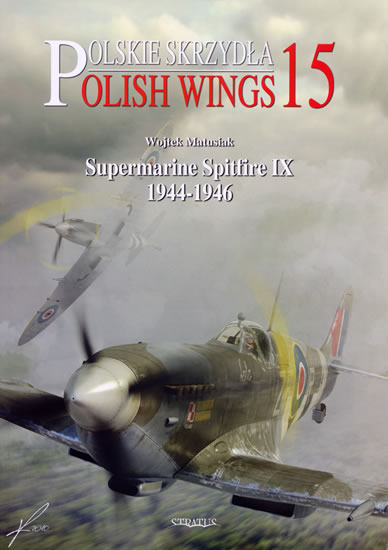
Both books (see also Fighting Units in Colour) cover the operational duties of the Polish squadrons flying these iconic aircraft of the Second World War. Each book covers not only the history of the squadrons involved, but also the locations and individual aircraft making these books an invaluable reference tool for ‘plane buffs’ or those researching family or local histories. While Jerzy B. Cynk’s two volumes on the Polish Air Force are the ‘official history, these two books fill in gaps through painstaking research and provide essential detail missing in others.
(See also Polskie Skrzydła / Polish Wings 15: Supermarine Spitfire IX)
Both the Spitfire and Mustang were exceptional in their roles for the ‘wings of victory’ during WWII and the PAF’s mastery of the air whose role has recently been exonerated and elevated, particularly in the Britain’s media through events recognising the PAF’s success and contribution.
Wojtek Matusiak and Zbigniew Kolacha have completed a thorough task to make this level of detail accessible to future generations in order for us to make sense and semblance of another generation’s selfless courage. The quality of the photographs covering roles of ground crew, mechanics, armourers and pilots are in many cases exceptional and provides an insight into the operations of a squadron. The dedication and technical improvisation by the ground crews to keep damaged aircraft operational can be clearly seen where the cannibalization of stricken aircraft kept another operational to maintain the squadron’s front-line strength. A favourite photo must be of a beer barrel being adapted for high-speed deliver to post-D-Day airfields in Northern France or drop-tanks that may have delivered ‘supplies’ but not those officially recorded on the inventory.
The Spitfire IX had been a trusty workhorse for squadron nos. 308, 317, 303 through the latter stages of the war when the conversion to Mustangs began to take place. Wojtek Matusiak’s detail also includes pertinent facts that for some squadrons’ like 303 were flying worn-out craft. Indeed, the commander of 303 Squadron Leader B. H. Drobinski, D.F.C officially complained when the number of incidents including pilot loss due to mechanical malfunction became unacceptable.
The PAF began converting to Mustangs for operational duty in April 1944 with earlier variants being used for photo-reconnaissance with the 309 squadron from 1942. The PAF squadrons equipped with Mustangs were nos. 303, 306, 309, 315 and 316. The Mustang III and IV were favourites amongst the pilots and for some the conversion came too late in their war. My father’s last flight with 303 Squadron was on 22nd November 1946 when he flew Mustang MIV (KM239) to Llendon in Wales for scrap. Looking through Wojtek Matusiak and Zbigniew Kolacha’s testimony to the men and their flying machines, the last flight to the scrap-yard was an awful loss for such a fine craft.
Julian Hoseason, editor polandinexile.com
See also Fighting Units in Colour