George Dziedzic, 2026, Barnthorn
ISBN: 978-1-917120-61-6.
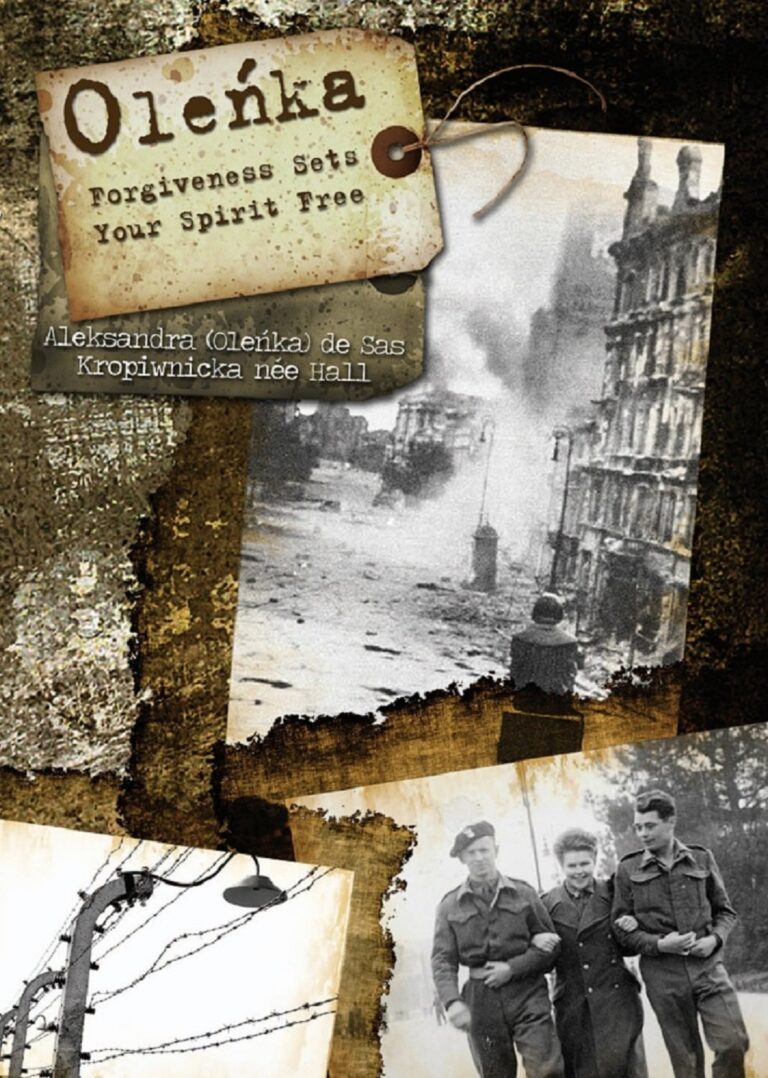
The story is split into four parts covering the strong narrative stories of Helena, Jan, their family and friends and finally post-war settling in Britain. The book opens with a brief history of Poland followed by Poland’s contribution and injustices in World War II to help contextualise the family’s journey and the historic events they went through. Family histories such as this are important for not only preserving their memory but also enable those researching their own family histories to understand historic context and the sheer level of resilience to survive.
Part One is about Helena’s journey from Poland to England from 1939 to 1945. Helena was born in Russia in 1919 (now Belarus) to Polish parents where her childhood years were spent in the eastern parts of Poland in Wilno (Vilnius). Her father, Piotr Paszkowski was ennobled on 25th November 1870 whose family crest included a blind raven (Ślepowron). He had married Anna Cygankiewicz in Homel and raised four children: Helena, Walenty, Henryk and Rajmund.
Their early days were based on the management of eastern railroads covering Belarus and Lithuania requiring the family to move districts and provided the necessary transport to school. The region was a ‘contested landscape’ post World War 1 between Russia, the Ukraine and the newly reemerging Baltic States. Poland had already defeated and humiliated the Red Army in 1921 and Stalin sought revenge. Consequently, eight-year-old Helena joined the Girl Guides and the Przysposobienie Wojskowe Kobiet (PWK), like many school age girls and boys to learn paramilitary training. Prior to the outbreak of war, although she had duties and went to camps organised by the PWK, she attended the World Trade Fair in Paris in 1937 managing 50 girls representing Poland. It was a month-long trip that took in Prague, Nuremberg, Nancy, Reims, Brussels and Berlin.
Chapter Two:
After matriculation, Helena enrolled in the University of Lwów in the Academy of Foreign Commerce studying geography, foreign trade law and the science of commodities in the autumn of 1938. Her studies were halted through the outbreak of war. On 17th September, the Soviets crossed the border. Helena returned to Lwów to collect her personal things. Sadly, her father had tooth ache and sought help from a Russian dentist which resulted in his arrest and disappearance, never to be seen again by his family. Imprisoned in the NKVD prison in the Muchawiec prison close to the river Muchawiec (Mukhavets) in today’s Belarus, his last letter came from Smolensk in April 1940 and never heard of again.
At two in the morning on 13th April 1940, the dreaded knock on the door signalled their deportation to Kazakhstan in the second wave of deportations which contained 300,000 Poles. Often families buried chests of valuables to collect on their return which for many would never come. The journey took ten days in atrocious conditions, poor sanitation and hunger which led to many premature deaths. Locals would provide food and water, passing them a narrow grill.
On arrival in Kazakhstan in a large village called Martuk, they were freed t find work, accommodation and a weekly report to an office with a curt warning not to escape. For Helena, the only opportunity for work was initially in a mine before using her administrative skills in the office. One brother became a shepherd, protecting the flock from wolves that roamed the steppe while the youngest brother Rajek went to school. Food was rationed and poor that resulted in scurvy. Having taken a sewing machine as part of their belongings, Helena’s mother repaired soldier’s coats in return for extra rations. The family received post despite the chaos of the deportations and after 22nd June 1941 when Germany invaded the Soviet Union in operation BARBAROSSA, Stalin eventually agreed to allow most of the imprisoned Poles to join Ander’s Army being formed in the Middle East.
Chapter 3:
This chapter covers the exodus from Kazakhstan to Persia (Iran). Helena and her brother Walek took the train from Martuk to Lugovoe near Kulan (not to be confused with the wild asses) in southern Kazakhstan and then onto Gen. Anders recruitment camp where the 28th Regiment was formed on 28th January 1942. The new recruits were poorly treated despite being fellow Poles and the rations were meagre. Helena became a secretary to a Polish Major before being shipped to Guzar in Uzbekistan where other Polish units were based. Travel documents had been stolen which delayed Helena’s recruitment into the PWSK (Pomocnicza Wojskowo Służba Kobiet). From here they were transported probably by train to Krasnovodsk (Türkmenbaşy) a major transit point for Persia. They boarded an overloaded ship to Derbent in Dagestan, Russia and crossed the Caspian Sea to Pahlevi (Bandar Anzali) in Persia. Only a third of the 1.6 million Poles deported to the Gulags survived. Deloused, fed and given new uniforms, they left for Tehran. A slight mystery unfolded over the fate of Helena’s mother and brothers Heniek and Rajmund. It is possible that after Heniek was recruited into Berling’s Army he obtained travel documents for the family to return to Poland.
In August 1942, Helena and Walek were in a massive Polish camp on the outskirts of Tehran and then transited to Haifa in Palestine probably in part by truck to the Iraqi border– a daunting journey. The railway network in Iraq was more developed.
Chapter 4:
At a camp based in Rehovot in Palestine, Helena and Walek were given choices of Britain, Australia and Canada. In early 1943, Helena was given the opportunity to complete her studies in Britain and on 1st January 1943 left Port Said in Egypt for Britain via Durban on the SS Nieuw Amsterdam, a requisitioned troop ship which eventually transported more than 378,000 troops. Walek joined Anders Army and fought at Monte Cassino. Durban to Liverpool was onboard the RMS Empress of Canada and left Durban on 1st March 1943 via Cape Town with refugees and Italian POWs. On Friday 13th 1943, at around 11.45pm a torpedo from the Italian submarine Leonardo da Vinci struck the ship about 400 miles off Freetown. Helena recounts an Italian army doctor had entered the radio room and arranged his pickup by the submarine. Sadly, of the 1,800 passengers, 392 died of which 149 were Italian POWs. Helena had managed to collect her valuables and scrambled aboard an overloaded lifeboat. At around 1 am the second torpedo sunk the vessel and the Italian doctor was seen to be picked up. For the survivors, dawn brought a new horror of shark attacks and overloaded lifeboats potentially capsizing that forced the deckhands to cut off the hands of those clinging to the boats.
About 17 hours after the ship had sunk, the survivors were spotted by a Catalina flying boats and a squadron of British ships picked up the survivors. It is a harrowing account told by Helena and it haunted her for the rest of her life. Taken to Freetown, Sierra Leone Helena boarded the SS Mauretania bound for Liverpool and arrived on 10th April 1943 during a storm.
Chapter 5
Covers the WAAF Service (Pomocnicza Lotnicza Służba Kobiet) in the United Kingdom with her training taking place at RAF Wilmslow from 26th July to 15th August 1943. Her role as a training officer brought her into contact with recruits from Russia, Africa, North and South America, former concentration camp inmates and the Polish Home Army (Armia Krajowa or AK). Her role took her to all the RAF stations where Poles were based.
On 5th January 1946, her posting to RAF Chedburgh in Suffolk, was life changing – she met Jan Dziedzic who had flown special operations for SOE. They married on 15th August 1946 in Bury St. Edmunds and Helena completed her military postings at RAF Hucknall.
Helena, a devout catholic believed her life had been protected by Our Lady of Ostra Brama in Vilnius, Lithuania and named her farm near Stansted after her.
Part Two
Chapter 1:
This chapter traces Jan’s early life in Poland. His father, Piotr was a gamekeeper for Count Edward Krasiński in Opinogóra, near Ciechanów in north-central Poland in the Masovian Voivodship. The family lodged in a modest forester’s lodge and the Count assisted with the children’s education. As small holders, there was a degree of self-sufficiency, and his father was an avid beekeeper. Jan had a sister Sabina and two brothers, Zygmunt and Jerzy. His brothers played in the ruins of a small castle and Jerzy claims he even saw a ghost there.
Chapter 2:
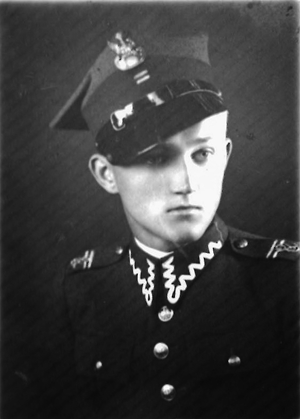
Like many young men, Jan’s introduction to flying was through learning how to fly gliders while attending the Zygmunt Krasiński Gymnasium in Ciechanów. He applied to the Technical Aviation Cadet School and passed his exams and then was admitted to the Polish Air Force Academy for officers at Dęblin after he had completed a course with the 76th regiment at Grodno (Hrodna in Belarus).
His training covered learning to fly on an RWD-8 and then PWS-26 in Borowina-Gołąb.


On 1st September 1939, Polish airfields came under attack by the Luftwaffe with Borowina-Gołąb being attacked by a formation of 9 Dornier bombers at dawn on 2nd September. Although Polish P-7s counter attacked, these aircraft were slower and less effective. The invasion and later partition of Poland between the Germans and Soviets was to follow.
Chapter 3:
In early September with airfields destroyed, the young airmen made their escape on foot utilising the forests for cover and walking by night eventually entering Hungary and interned at the camp at Nagykáta. Jan’s account of his escape is an important one since the detail will help others researching family histories and the lengths they went to, for example the young Poles became deckhands, mechanics and took watches while on board MS. Oksywie that took them from Piraeus in Greece to Marseille, France. The young pilots were transferred to a base at Salon de Provence situated 52km from Marseille. The comparative comfort and luxury soon faded when they were transferred to the base at Istres on 3rdNovember 1939. The chapter concludes with the wider events surrounding the Poles escaping into Hungary.
Jan’s stay in France also included time at Lyons-Bron airfield as a French pilot until the collapse of France and being tricked into entering a POW camp from which they escaped west towards St. Jean de Luz. He boarded the SS Arandora Star and arrived in Liverpool on 27th June 1940 after being at sea for 5 days. The evacuation of Allied troops from the west coast of France was as important as Dunkirk (Operation AERIAL and Operation CYCLE).
Chapter 4
On 21st June 1941 Jan started his basic flying course at Elementary Flying Training School (EFTS) at Kingston near Carlise in a Miles Magister which had a low stall speed (37 knots), making it an ideal trainer. After completing his basic training, he was transferred to RAF Montrose on 12th August 1941 to start training on Hawker Hurricanes. By 3rd December 1941 he was on his way to RAF Dumfries flying an Avro Anson and Blackburn Bothas as a staff pilot.
On 15th September 1942 he was transferred to No. 18 OTU at RAF Bramcote to retrain on Vickers Wellingtons where Polish personnel were forming. After Bramcote, he was sent to No. 305 Squadron (PAF) based at RAF Hemswell near Gainsborough. In January 1943 he was stationed at No. 18 OTU training on Wellingtons until 21st May 1943 where he went on a bombing mission over northern Holland and four more operations over Dortmund, Dusseldorf, Essen and Wuppertal in the PAF 305 Squadron. This section highlights the training period needed to prepare crews for the deadly missions over Germany and occupied countries. RAF Ingham and Finningley were also used by 305 Squadron. After each mission, a debriefing gathering vital information on night fighters and flak positions took place often taken by a member of the PLSK. Post operations, those who had not returned were marked by a black ribbon at their places in the mess.
Jan took part in Operation GOMORRAH, flying three sorties over Hamburg between 24th and 29th July 1943. The resulting firestorms in Hamburg were at the time the heaviest assault in the history of aerial warfare. Each raid was prey to the Bf 110, a heavily armoured night fighter that used infra-red and later radar to track down the bombers. His tour of duty ended on 31st July 1943 with the squadron being reorganised after completing fourteen dangerous missions over cities like Essen, Cologne, Hamburg and others. This period was close to the height of bomber missions. Although the USAAF had started bomber missions in July 1942, the full effect of the US support gathered momentum in January 1943 easing pressure on the RAF/ PAF forces.
On 11th August 1943, Jan volunteered for 138 Special Duties Squadron based at Tempsford. Initially, the squadron flew Handley Page Halifax’s’ and Jan completed four missions from Tempsford and one from Exeter before transfer to Italy in November 1943. They left from RAF Hurn, in Dorset and flew via Gibraltar to Blida in Algeria, Sidi Amur in Tunisia and from Berca (Benghazi) in Libya to Campo Casale near Brindisi as part of the RAF unit 1586 Polish Special Duties Flight.
On the 18th and 22nd December 1943, Jan and his crew completed their first missions to Poland despite poor weather over the Balkans cancelling or causing aircraft to crash. Various books like “Dane nam Było Przeżyć” by Felicjan Majorkiewicz a Cichociemny describes their flights to Poland. (The Bari flight logs are in The National Archives under HS4-176). The written accounts by Jan are also an important reminder of the risks these crews undertook to support the AK and subsequent interviews by the BBC underpin 1586 Polish Special Duties Flight their importance and bravery of the squadron. He flew 40 missions, 18 in Wellingtons and 22 in Halifax’s.
Part Three – Family and Friends
Chapter 1:
This section covers Jerzy Dziedzic, Jan’s elder brother who prior to the war was in the Infantry Cadet School in Różan to the north of Warsaw in the Mazovian Voivodship. After graduating he was sent to the Cavalry Cadet School in Grudziądz, a city in northern Poland on the river Vistula. He succeeded as top student and presented with a sabre by the President of Poland, Ignacy Mościcki and passed out as a 2nd Lieutenant. He was killed when war broke out at Olszewo near Białystok commanding the 2nd platoon in the 2nd squadron of the 3rd Kozietulski Regiment. The chapter contains an excerpt from Capt. Chludziński of the firefight. While in Hungary, Jan recalled the watch given to him by Jerzy suddenly stopped on the day and time he was killed. After the war, a museum and plaque were set up to honour the fallen at the battle of Olszewo.
From the outbreak of war, German propaganda taunted the Poles over cavalry charging German tanks. The Blitzkrieg was portrayed as a mechanised lightening attack. Both statements are far from the truth. Both sides used horsedrawn wagons and artillery pieces. The Poles on horseback used a special anti-tank rifle, the Model 35 as it was known. It was highly effective and an example of the weapon was smuggled out of Poland through Hungary by Krystyna Skarbek aka Christine Granville, Churchill’s favourite spy. The blueprint for the weapon was destroyed during the war, however a private collector in the USA has a copy, but not for sight by collectors or the public.
Chapter 2
Introduces us to Walek and Lodzia Paszkowski whose family had also been deported to Martuk in Kazakhstan. Walek was a good sportsman and had hopes of joining Poland’s Olympic team, however he ended up being a shepherd before joining Anders Army at Ługowoje. He joined the sappers and like many, his odyssey across the Middle East eventually brought him to Monte Cassino and survived the war. Lodzia’s story is like others of deportation to Siberia to Ukhta and eventually released. Helena and her elder brother enlisted with Anders while Lodzia was sent to a special training school for Polish girls at Nazareth in Palestine while the rest of the family were sent to refugee camps in East Africa. She was discharged from the Polish Army when Britain left the Middle East.
Chapter 3
This chapter follows the exploits of Bogdan Koper. He was Jan’s radio operator on most of their operational missions over Germany. Sadly, he was killed on 19th July 1944 while training on a night mission out of RAF Swinderby in an Airspeed AS. 10 Oxford. He was just 21 years old having completes 25 operations and a poignant reminder of the countless young men and women killed in their line of duty and a question of honour to free Poland.
Chapter 4
Introduces us to Alfons Maćkowiak (Alan Mack), a keen sportsman and trained as an Artillery Officer. At the outbreak of war, he was called up to join a reserve unit, 32nd Light Artillery Regiment as the scouting officer for the 9th Battery. They were part of the defence of Różan and battles on the River Bug. With the Soviet invasion, he was taken into captivity and boarded a train for Katyń where over 20,000 Poles were murdered by the NKVD. He managed to escape from the train and made his way to Hungary and then France. During the fall of France, he commanded the 2nd Battery platoon of the 1st Vilnius Light Artillery Regiment at the battle of Lagarde 17-18th June 1940. Taken prisoner, he escaped from the POW camp near Strasbourg and escaped into Vichy France where Polish cells managed escape lines to Britain. He served in the 1st Independent Parachute Brigade and in 1942 enrolled into the Cichociemni at STS 43, Audley End (Badge No. 0117/1426). He was deployed to Operation MARKET GARDEN. He was wounded and captured near Oosterbeek and was a POW from 31st October 1944 until 2nd April 1945 in Oflag IXA in Spangenberg. On return to Britain, he was later assigned to the 4th Anti-tank Artillery Regiment as a battery commander with the rank of Captain. After the war, he became a hotelier and famously rescued an RAF pilot and airman from a crashed Wellington for which he added a commendation by King George VI to his collection of medals.
Chapter 5
Recounts the story of Eugeniusz Horbaczewski (Dziubek), a fighter ace with over 250 missions to his credit. He had 16 confirmed victories, 1 shared, 1 probable, 1 damaged and 4 V-1 flying bombs shot down. Although born in Kiev, his family moved to Brześc on the River Bug. He had met Jan’s future wife Helena at school and remained in contact with her for the rest of their lives. He had also probably met Jan aboard MS. Oksywie when it sailed from Athens to Marseilles. Initially a pilot with the legendary 303 Squadron, he transferred to north Africa to Tunisia as part of the “Skalski’s Circus”. Based with No.43 Squadron, they flew over Malta, Sicily and Italy. In February 1944 he took over the command of Polish 315 Squadron flying the new P-51 Mustang Mk, III. He was operational over France hunting V-1’s until his untimely death when he was shot down on 18th August 1944 while performing a sweep or RODEO near Beauvais.
Chapter 6:
Recounts the story of Edmund Helwig (Wilczek) who became one of Poland’s most highly decorated officers. He had enlisted into the Polish Army on 22nd September 1937 as war was imminent. Captured by the Russians, he managed to escape into Romania, France and then Britain. He served as an Observer/ Navigator with the PAF and rose to the rank of Captain. Known as Wilczek or Wolf, he was also known as Edmund or Eddie. He participated in Operation MOST II or III and WILDHORN II or III where parts of the V-2 rocket were smuggled out of Poland and the chapter covers the secret operations against V-1 and V-2 weapons. Their is some confusion over names on manifests. The other operations he participated in were supply missions over Poland.After the war he was recruited by the CIA in the 1950s to fly RB-69A spy aircraft out of Wiesbaden from 1957-1959 and then Florida from April 1957 to December 1961.

He returned to Britain in March 1962 to marry Maria Sławińska at Saffron Walden Registry Office and had two children Richard and Barbara.
Part 4
Post War:
Three chapters covers the family’s post war fortunes dealing with post war shortages and prejudice towards the Poles while establishing their security and stabilising their future with the setting up of a mushroom growing farm in the former officer’s mess of RAF Great Sampford, Wimbish Green. Food rationing was a step-by-step process where some items like canned food ended in 1948, meat and bacon ended in 1954 while coal ended in 1958.
For the Poles, finding work, housing and facing prejudice and discrimination made adapting to the British way of life hard. These chapters are an important read for younger generations to understand what this wartime generation went through. While the Polish Resettlement Corps (PRC) attempted to alleviate some symptoms, the accommodation used were former barracks on army and air force sites away from the main population. Some chose repatriation to Poland while others sought out immigration routes to the USA, Canada, Australia and New Zealand.
For those who returned to Poland, the Soviet backed puppet government inflicted a degree of brutality based on rank and service. For the surviving Cichociemni, some were shot or lived under constant surveillance until the collapse of communism. They became known as the “Cursed Soldiers”. Many senior officers were reimprisoned for ‘re-education’ and seen as a danger to the communist regime or simply executed. Many were placed into former POW camps until the late 1950s when various amnesties took place.
The final chapters cover the need to keep memories alive and re-unions to exorcize the dreadful experiences the Soviets inflicted upon the deportees and for those who fought so valiantly to defeat the Nazis. The level of feelings over the betrayal of the Poles at Yalta is unfathomable that resulted in many leading figures not to write their memoires.
The book is an informative and pleasant read whose narrative is never dull, but enlightening for those not too familiar with Poland’s history. There are many plates and photos from the family’s archives to illustrate chapters, and other references are used throughout to underpin the analysis. In a recent conversation with George Dziedzic and having read the final chapters of the book, there was a revelation of coincidences. He and his sister went to the same primary school at Wimbish Green and so did me and my elder brother, and we were there at the same time, but in different classes. It was basically a Polish community living in the surrounding area brought together by circumstances and education. My father, Zenon Krzeptowski like many Poles, anglicised their names partially due to prejudice, but also over pronunciation. Zenon Kaye was a flying instructor at RAF Debden with Jan Dziedzic, and we’ll never know if the ever met or knew each other. Sadly, Zenon was killed in an air crash in July 1960. David Evans, a local historian wrote two articles about the crash in the Newport News in 2025 – the location of where Zenon is buried.